

You’re looking at a $2.3 million office building in a secondary market. The broker promises 8% cash-on-cash returns. The pro forma looks clean. But three months after closing, your anchor tenant announces they’re downsizing by 40%, and suddenly you’re staring at a $15,000 monthly shortfall with no backup plan. This is the reality of commercial real estate in 2026, not the polished pitch deck version.
Is commercial real estate a good investment right now? Not necessarily a bad one, but the landscape has shifted. Interest rates remain elevated. Office space sits vacant in major metros. Retail property faces ongoing pressure from e-commerce. And capital requirements have climbed as lenders tighten standards.
This article walks through the real-world pros and cons, the current market conditions, and whether commercial property makes sense for your portfolio right now. We’ll also show you why land investing delivers many of the same benefits, appreciation, tax advantages, and tangible asset ownership, without the operational headaches or capital intensity that come with buildings and tenants. For investors exploring different types of land investments, understanding these distinctions is crucial.
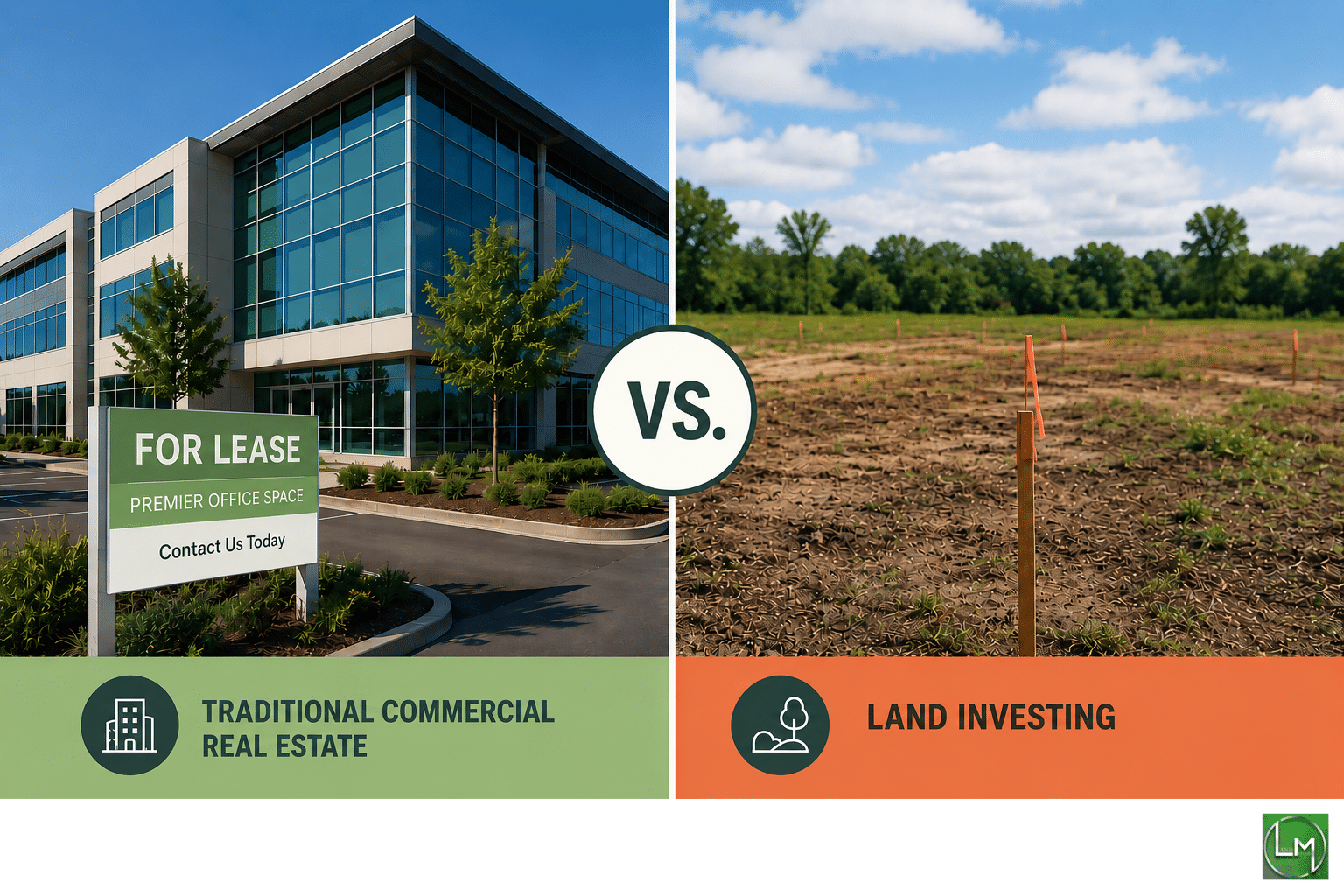
Definition and Types of Commercial Property
Commercial real estate refers to property used for business purposes rather than residential living. The owner generates income by leasing space to tenants who operate businesses, store goods, or house employees.
The main types of commercial property include:
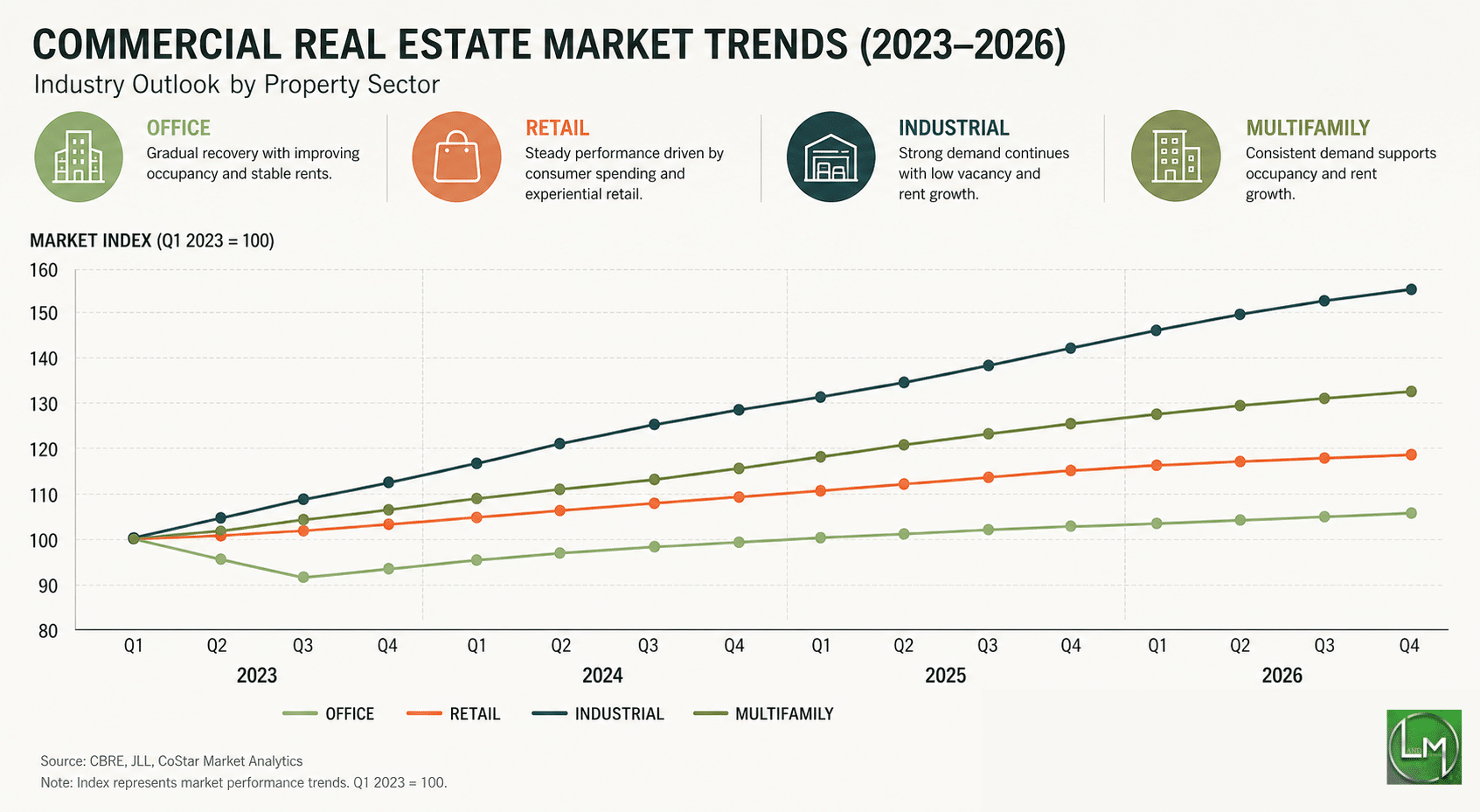
Office space: Buildings leased to businesses for administrative, professional, or corporate use. This category has faced the most disruption post-pandemic, with remote work reducing demand in many markets.
Retail property: Storefronts, shopping centers, and malls leased to retailers and service businesses. E-commerce continues to reshape this sector, creating winners and losers based on location and tenant mix.
Industrial property: Warehouses, distribution centers, and manufacturing facilities. This has been one of the stronger performers in recent years, driven by demand in logistics and supply chains.
Multifamily property: Apartment buildings with five or more units. Technically a hybrid category, but often grouped with commercial real estate due to financing and management similarities.
Each type of commercial property carries different risk profiles, tenant relationships, and capital requirements.
Commercial Real Estate Pros in 2026
Commercial real estate offers several advantages that attract investors looking to build long-term wealth.
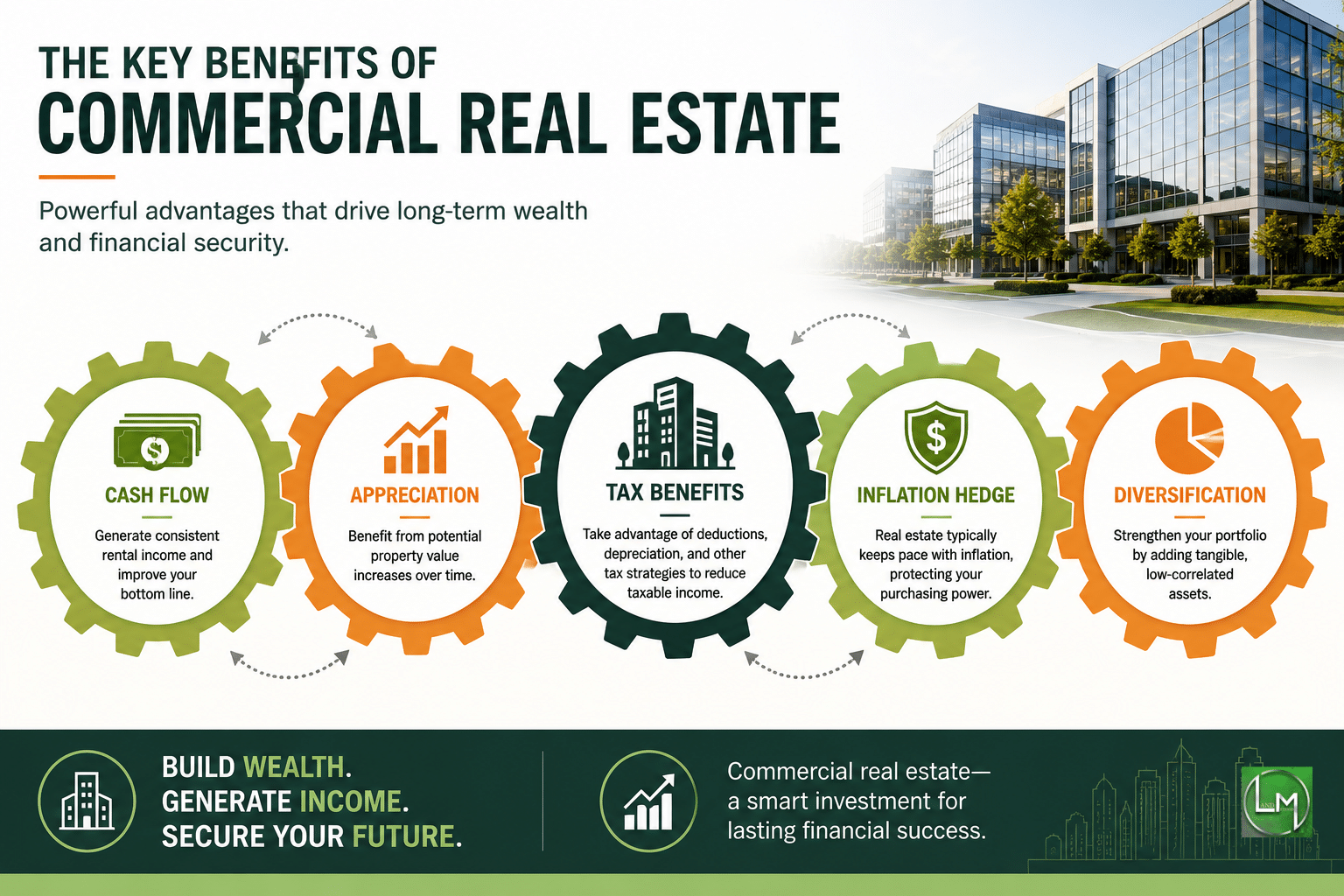
Cash Flow from Lease Structures: One of the main attractions of commercial real estate is steady rental income. Longer leases, often three to ten years, provide predictable cash flow when tenants remain solvent. Lease structures matter: triple‑net (NNN) leases shift most operating costs to tenants, while gross leases leave landlords covering expenses. Strong markets with creditworthy tenants can deliver stable returns, but vacancies or tenant turnover quickly erode profitability. According to U.S. Census Bureau data on commercial vacancy rates, these figures vary significantly by market and property type.
Appreciation potential: Well-located commercial property can increase in value over time, especially in growing markets with limited supply. Appreciation depends on local economic conditions, tenant demand, and property management quality. Property values rise when net operating income increases.
Inflation hedge: Lease agreements often include rent escalations tied to inflation or fixed annual increases. As operating costs rise, rents can adjust upward, protecting your purchasing power.
Diversification: Adding commercial real estate to a portfolio of stocks and bonds can reduce overall volatility. Real estate often moves independently of equity markets, though not always. Investors interested in how real estate compares with other asset classes should carefully consider these diversification benefits.
Risks of Commercial Real Estate Investment
Commercial real estate investment also carries meaningful downsides that can erode returns or create operational stress.
High capital requirements: Down payments typically range from 20% to 40% of the purchase price. Closing costs, due diligence expenses, and initial repairs add to the upfront investment. Smaller investors often get priced out entirely.
Illiquidity: Selling commercial property takes months, not days. If you need to exit quickly due to market conditions or personal circumstances, you may be forced to accept a steep discount.
Property management complexity: Managing commercial tenants is not passive. Lease negotiations, maintenance coordination, tenant disputes, and vendor management require time and expertise. Many investors hire property management firms, which reduces net cash flow.
Tenant risk: A single tenant default can eliminate months of income. In multi-tenant properties, losing an anchor tenant can trigger a cascade of vacancies. Many assume tenant quality alone protects you, but in reality, even creditworthy tenants can restructure or relocate when market conditions shift.
Market volatility and economic sensitivity: Commercial real estate values and occupancy rates are directly tied to economic conditions. Recessions, interest rate hikes, and regional downturns can hit hard and fast.
Financing risk: Most commercial real estate investments involve debt. If interest rates rise or your property underperforms, refinancing can become difficult or impossible. Balloon payments and variable-rate loans add additional risk.
These risks don’t disqualify commercial real estate as a good investment, but they do require honest assessment. If you lack the capital, time, or risk tolerance to manage these challenges, other asset classes may be a better fit.
Who Should Invest in Commercial Real Estate
Commercial real estate is not for everyone. It works best for investors who meet specific criteria.
You have significant capital: If you can comfortably deploy $100,000 or more in a single investment without straining your finances, commercial real estate becomes accessible. Smaller amounts often limit you to crowdfunding platforms or REITs, which dilute control and upside.
You have time or can hire management: Managing commercial property is not a set-it-and-forget-it activity. If you lack the time or expertise, you’ll need to hire property management, which reduces net returns.
You understand local markets: Commercial real estate is hyper-local. Success depends on knowing tenant demand, zoning rules, economic trends, and competitive supply in a specific area. Investors should also consider whether land investing offers comparable benefits while carrying a different risk profile.
For investors who meet these criteria, commercial real estate can be a good investment. For those who don’t, the operational burden and capital intensity often outweigh the benefits.
Current Market Conditions and Timing (2026 Outlook)
The commercial real estate market in 2026 is navigating several headwinds, making timing and property selection more critical than ever.
- Interest rates remain elevated
- Office space faces structural challenges
- Retail property is bifurcated
- Industrial property shows resilience
- Capital is more selective
Commercial Real Estate vs. Other Investments?
Is commercial real estate a good investment when stacked against alternatives? Each asset class has distinct characteristics.
Commercial real estate vs. residential real estate: Commercial property typically offers longer leases and higher income potential, but requires more capital and expertise. Residential real estate is more accessible and liquid, but tenant turnover is higher, and leases are shorter.
Commercial real estate vs. stocks and bonds: Stocks offer liquidity and lower capital requirements, but no direct control and higher volatility. Bonds provide predictable income but limited upside. Commercial real estate offers tangible asset ownership and tax benefits, but requires active management and significant capital.
Compared to land investing, commercial property requires more capital and management. Land offers similar appreciation and tax benefits but with fewer operational burdens.
Why Land Investing Offers Commercial Real Estate Benefits Without the Downsides
If you’re attracted to the wealth-building potential of commercial real estate but concerned about the capital requirements, operational complexity, and tenant risk, land investing offers a practical alternative.
Appreciation without buildings: Land appreciates based on location, development potential, and market demand. You capture upside without maintaining structures, managing tenants, or dealing with property management.
Lower capital requirements: You can acquire land for a fraction of what a commercial building costs. This makes real estate investing accessible to a broader range of investors.
No tenant relationships: You’re not negotiating leases, chasing rent, or dealing with tenant disputes. Your time and stress are dramatically reduced.
No maintenance or repairs: Land doesn’t have a roof to replace, HVAC systems to service, or parking lots to repave. Operating costs are minimal, typically limited to property taxes and occasional land management.
Tax benefits still apply: You can still take advantage of depreciation (on certain improvements), 1031 exchanges, and long-term capital gains treatment.
Flexibility and control: You decide when to sell, how to position the property, and what improvements (if any) to make. You’re not locked into a lease structure or tenant obligations. Investors can apply proven property acquisition strategies to find undervalued land opportunities.
Is Commercial Real Estate a Good Investment in 2026? (Final Verdict)
Commercial real estate can be worthwhile if you have substantial capital, can tolerate illiquidity, and understand local markets. It suits investors prepared for tenant risk, financing challenges, and active management. For investors seeking passive exposure, land investing provides a simpler alternative.
At The Land Method, we teach investors how to find, evaluate, and profit from land deals using systems that work in today’s market. We’re not just educators. We’re active land investors who close deals every month and teach based on real-world experience. If you’re weighing your options and want to explore them with our team, we can help you determine whether land investing fits your goals and situation.

FAQs
Q1. What are the main types of commercial property?
A1.
The main types are office, retail, industrial, and multifamily properties. Each has different risk profiles and tenant dynamics.
Q2. What are the biggest risks of investing in commercial property?
A2.
The biggest risks include tenant defaults, high capital requirements, illiquidity, market volatility, and the operational complexity of property management.
Q3. Can I invest in commercial real estate with no experience?
A3.
It’s possible but not advisable without education, mentorship, or experienced partners. Commercial real estate requires market knowledge, financial analysis skills, and operational expertise.
Q4. What tax benefits does commercial real estate offer?
A4.
Key tax benefits include depreciation deductions, mortgage interest deductions, operating expense deductions, and the ability to defer capital gains through 1031 exchanges.
Q5. Is commercial real estate more profitable than residential?
A5.
Not necessarily. Commercial property can offer higher returns but also entails higher risk, greater capital requirements, and greater operational complexity. Profitability depends on deal quality and execution.
Q6. How long should I plan to hold a commercial property?
A6.
Most successful commercial real estate investment involves holding periods of five to ten years or longer. Shorter holds often don’t allow enough time to recover transaction costs and realize appreciation.

Ginis Garcia is a seasoned real estate investor with over 14 years of experience helping both new and experienced investors achieve their goals in the housing and land markets. He started doing deals here and there in 2008. In 2011, He started working for a major real estate investor. He got his real estate license in 2012.