

Let’s be honest, most people like the idea of real estate investing more than they like the reality of being a landlord.
Late-night maintenance calls. Property taxes that keep climbing. Tenants who disappear before paying rent.
So if you’re wondering how to invest in real estate without buying property, the good news is this: you absolutely can. And in many cases, it’s smarter.
You don’t need to own an entire property. You don’t need to deal with a property manager. And you definitely don’t need to drain your bank account for a massive purchase price.
At the same time, it’s important to understand that land investing is emerging as a powerful alternative within the real estate space, offering flexibility, lower barriers to entry, and unique income opportunities without the complexities of managing built properties.
There are ways to build exposure to the real estate market, earn rental income, and create passive income, without direct property ownership.
Let’s walk through what that actually looks like.
Exploring Real Estate Investment Trusts (REITs)
What Are REITs and How Do They Work?
If you’ve spent any time researching real estate investing, you’ve probably come across Real Estate Investment Trusts.
REITs are companies that own or finance income-producing real estate assets. Instead of buying physical property yourself, you buy shares in the company.
That’s it.
Some are publicly-traded REITs listed on the stock exchange and regulated by the Securities and Exchange Commission. Others are private, but most beginners stick with the public ones because they’re easier to buy and sell.
Here’s why many individual investors prefer REITs:
- They generate dividend yields from rental income.
- They give exposure to commercial real estate like office buildings, shopping centers, and apartment buildings.
- You can invest through a REIT ETF with a low expense ratio.
- You avoid direct property ownership headaches.
There are also Mortgage REITs, which don’t own property — they lend money and earn income from mortgage interest. These can behave differently depending on interest rates and market conditions.
And yes, REITs move with the stock market sometimes. But they still represent real estate assets underneath, actual buildings, leases, and tenants generating cash flow. For many investors, it’s a practical way to access the real estate sector without buying property outright.
Interestingly, some REITs and funds also include land assets or undeveloped real property, showing how land investing is quietly integrated into broader real estate portfolios.
Why REITs Are a Great Way to Diversify Your Portfolio
REITs are an interesting asset class because they blend features of real estate and stock market. Besides providing real estate sector exposure, increasing rental income, and enhancing the stock portfolio diversification, REITs also:
- Offer features of both real estate and stock market in a single investment vehicle
- Provide regular rental income
- Allow investors to go beyond the exposure to just stocks
Investment is also possible through real estate ETFs or a REIT ETF which package several REITs into one fund. It will minimize risk and offer exposure to different types of real estate.
One should not overlook the fact that REITs’ tax treatment is different from most stocks. REIT dividends are generally taxed as ordinary income, thus one needs to be quite familiar with income tax rules to reap the benefits of any tax advantages.
REITs offer several advantages over purchasing real estate, such as:
- Less money needed to get started
- No closing costs
- Higher liquidity
Though REITs are primarily in the business of investing in income-producing properties, land investing can be a good complement since it mainly relies on the potential for appreciation and the increase in the value of land over time.
Real Estate Crowdfunding and Alternative Investments
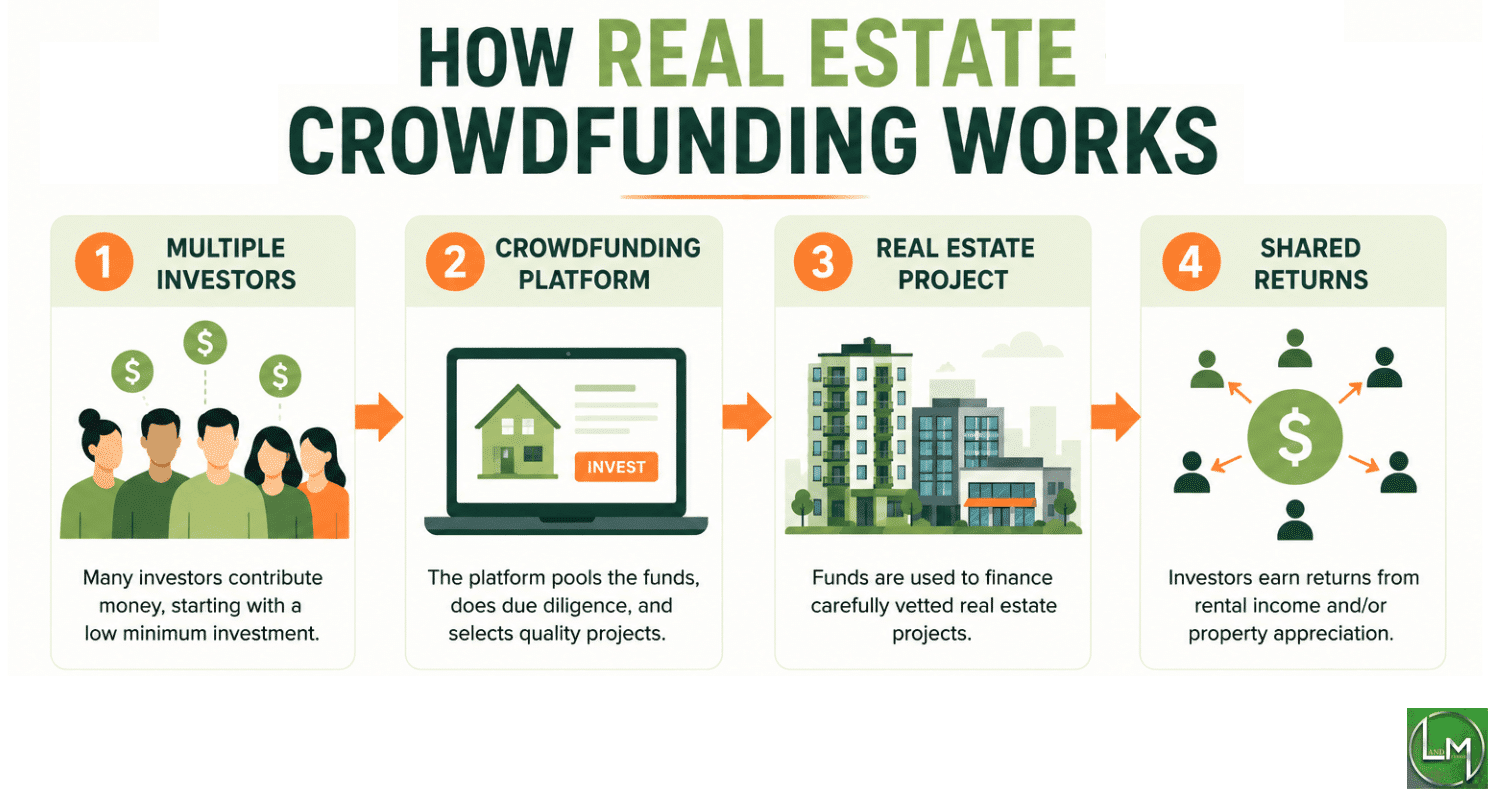
What Is Real Estate Crowdfunding?
Now we move into something a little more modern.
Real estate crowdfunding platforms allow investors to pool money into real estate projects. Instead of needing enough capital to buy an entire property, you can contribute a smaller amount.
Some platforms are open only to accredited investors, meaning you need a certain net worth or income level. Others allow non-accredited passive investors with lower minimums.
This approach can provide access to:
- Commercial real estate
- Large apartment complex developments
- Residential expansion projects
- Home construction ventures
Each deal is typically managed by a fund manager with a visible track record. That matters more than flashy marketing. Always do your due diligence.
Returns usually come from rental income, appreciation, or profit when the property is sold. But remember, these are still real estate projects. Market fluctuations and market conditions will affect performance.
Some crowdfunding platforms are now including land acquisition and development deals, making land investing more accessible to individual investors than ever before.
Alternative Investments Beyond Physical Property
For those who want to get into real estate without actually buying a property, there are a few very creative options:
Hard Money Loans
Another way you can make money is by lending to house flippers or developers and collecting your interest.
This type of loans are characteristically providing higher returns; however, you should be aware that such benefits come with the high risk.
Seller Financing
Lead a buyer directly and provide funds instead of financing through the big banks. Besides working as a means of payment, it is also a way to make steady income through the interest payments.
Real Estate Projects
Other sites give you the chance to be a part of construction projects for a limited time and eventually get the benefits of these very short-term projects to yourself. Besides utilizing the pay as you go model, in these projects, you also have the chance to make a change to the final outcome instead of a frozen one as in the other ones.
Not only can these methods give you a passive income, but by participating in the projects, you do not own the properties entirely, which is the most disadvantageous for real estate owners.
Very frequently, these projects are started by acquiring the land from scratch, so land investment as the manufacturer’s key role in the lifecycle of the manufacturing chain also applies to real estate.
Investing in Real Estate Mutual Funds and ETFs
Understanding Real Estate Mutual Funds
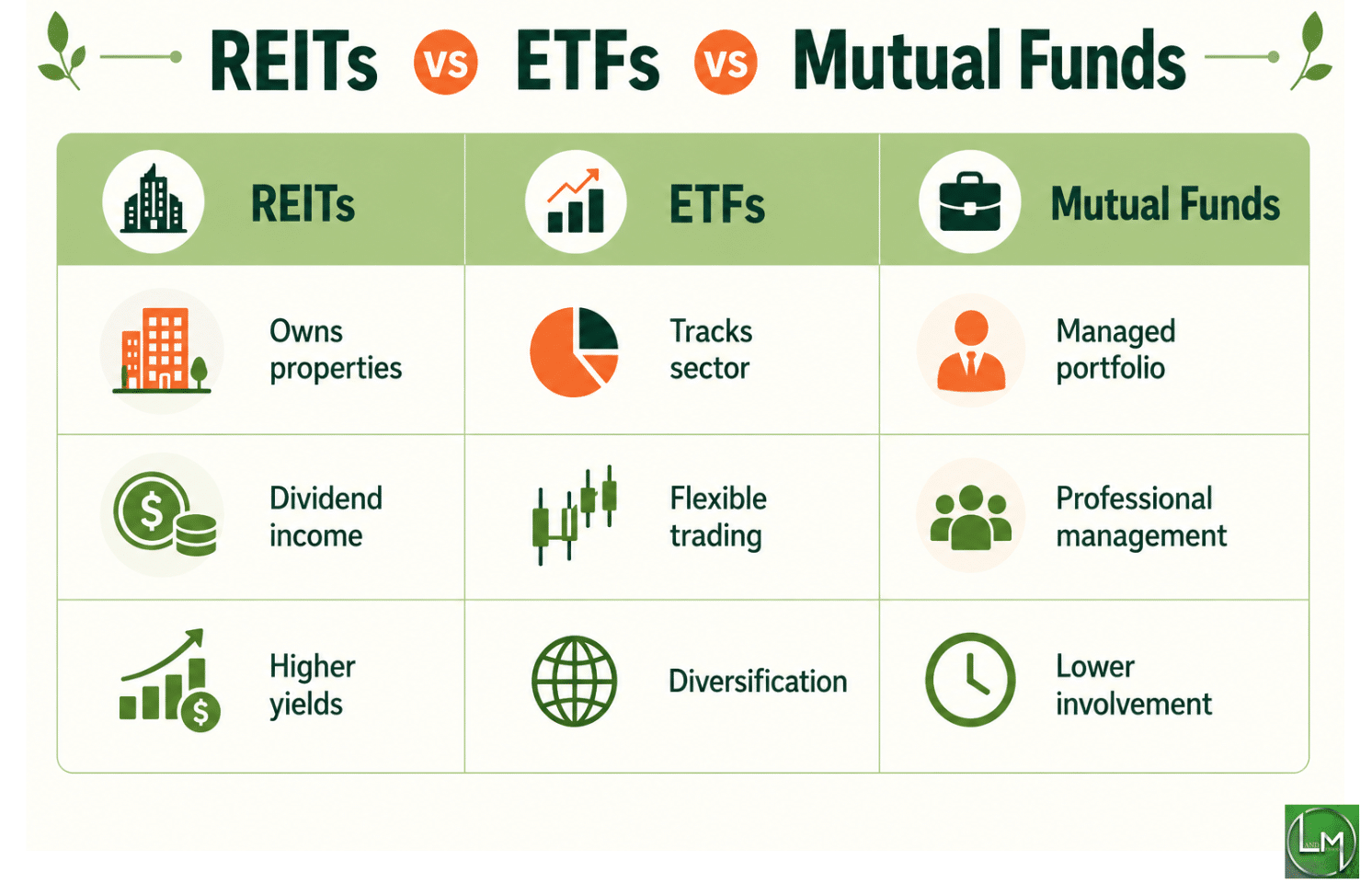
These funds pool together cash from investors and use it to invest in real estate investment trusts (REITs), real estate stocks, and other real estate assets.
Here are some examples of these funds:
- Apartment buildings
- Office buildings
- Retail spaces
This method can be ideal for new investors stepping into the real estate market because it is associated with a lower level of risk.
The advantages are:
- Investment managed by professionals
- Exposure to a variety of properties
- Lower amount of money needed
Why Real Estate ETFs Might Be the Best Way to Invest
Real estate ETFs, on one hand, resemble mutual funds; conversely, they trade like stocks on the stock exchange. They come with:
- Less costly expense ratio
- Higher liquidity
- The ability to buy/sell at any time
They mirror the real estate sector and give one access to various real estate firms and REITs.
If a person wants to be involved with both already developed real estate and the trends of land investment, doing so with ETFs can result in a well-rounded and diversified investment.
Exploring Real Estate Stocks and Real Property Ownership
Investing in Real Estate Stocks
Another method is to put your money in publicly traded real estate companies. These firms operate in various areas such as:
- Home building
- Property management
- Commercial real estate development
When you buy real estate shares, you effectively get a piece of:
- the residential property market
- fluctuations in property prices
- rental income trends
Additionally, many of these firms distribute dividends, further supporting your cash inflow.
Real Property Strategies Without Buying Entire Property
Here’s a few examples of hybrid real estate investing strategies:
House Hacking
Living in one part of the property while renting the other parts is a classic example of house hacking. This practice doesn’t mean you have to own the entire property, but it significantly reduces the amount of financial risk you have to take on.
Fractional Ownership
Certain companies make it possible to have a fractional or shared ownership in a property, thus each co-owner shares the expenses and the proceeds.
Rental Income Participation
Another way is to have a partnership with the property owner and you get a portion of the rental income without doing the property management work.
Benefits from rental property income can be enjoyed through these types of rental property investments approaches, absent of full responsibility.
Managing Costs and Financial Goals in Real Estate Investing
Some Very Important Costs To Remember
This is why even if you not buying a place, mistakes can still happen:
- Management fees
- Expense ratio (e.g. for funds and ETFs)
- Taxes on earnings, in general Anyway.
If you invest directly in real estate, some costs like:
- Mortgage interest
- Property taxes
- Maintenance costs
Based on data from the National Association of Realtors, in the long-term, real estate is known to have delivered competitive returns against other asset classes, so it can definitely be a good option to have for your portfolio.
In fact, land investing is often characterized by fewer costs since there are no buildings to maintain, sometimes taxes are also lower, not to mention there are no expenses related to tenants.
The level of interest and mortgage rates remains an important factor. When there is an increase in rates:
- The cost of getting a loan is high
- Real estate prices may change
- The strategy of investment will have to be modified
Matching Investments With Personal Financial Objectives
The moment before purchasing an investment, you need to know the financial goals that you have:
- Are you after residual income?
- Want to accumulate wealth over the long haul?
- Looking for quick profits?
Financial advisors will probably be able to help you:
- Identify an investment strategy that suits you best
- Find a good balance between risk and return
- Create a well-diversified real estate portfolio
It’s also very important to be aware of how the market moves and what your tax duties will be if you want to make very wise decisions when it comes to investment.
Learn more about The Land Method Coaching Program for hands-on guidance, proven land investing strategies, and real-world support from active investors.
Insights for Investing Without Owning Real Property
If you want to learn how to invest in real estate without actually purchasing property, here are some main methods you might want to concentrate on:
- Real Estate Investment Trusts (REITs)
- Real estate crowdfunding platforms
- Real estate ETFs and mutual funds
- Real estate stocks and alternative investments
You can use these tools to enjoy the perks of real estate investing, for instance, income and appreciation, without dealing with ownership.
Fortunately, today’s technology-driven investing has made real estate much more open to everyone than before. Whether you are just starting out as an investor or want to add more variety to your portfolio, there is a wide range of investment options are there.
If you’re serious about exploring land investing as a simpler, scalable way to enter real estate, learning from the right system can make all the difference.
The Land Method offers a structured approach to help you understand how land investing works, from identifying undervalued land to closing profitable deals without the complexity of traditional property ownership.
If you’re ready to move beyond theory and take action, get in touch with us to step into real estate without buying property.

FAQs
Q1. What is the best way to invest in real estate without buying property?
A1. The best way is through REITs, real estate ETFs, and crowdfunding platforms, which offer exposure without direct ownership.
Q2. Can I earn rental income without owning property?
A2. Yes, through REITs, crowdfunding investments, and partnerships, you can earn rental income indirectly.
Q3. Are real estate ETFs safe for beginners?
A3. They are relatively low-risk compared to direct property ownership and offer diversification, making them suitable for beginners.
Q4. Do I need a high net worth to invest in real estate this way?
A4. No, many platforms and ETFs allow small investments, making it accessible to individual investors.

Ginis Garcia is a seasoned real estate investor with over 14 years of experience helping both new and experienced investors achieve their goals in the housing and land markets. He started doing deals here and there in 2008. In 2011, He started working for a major real estate investor. He got his real estate license in 2012.