

Property acquisition in 2026 is defined by tighter credit, stricter underwriting, and more selective buyers. In the U.S., Commercial Real Estate pricing has adjusted after rate hikes, and investors are scrutinizing purchase price, cash flow, and risk far more carefully than they did a few years ago.
Today, Real Estate Acquisition is less about speed and more about structure. Strong due diligence, accurate financial analysis, and disciplined asset management planning now determine whether a real property acquisition supports long‑term investment goals or weakens a portfolio.
At The Land Method, we teach investors how to approach the acquisition process with clarity, how to evaluate real property, assess market conditions, and structure deals correctly from day one. This guide breaks down what property acquisition really looks like in 2026 and how to execute it with precision.
What Is Property Acquisition and Why Does It Matter?
Property acquisition is the foundation of any successful real estate journey. Whether you’re a first-time buyer or an experienced investor, the way you identify, evaluate, and secure a real estate asset directly influences your long-term returns. More than just purchasing land or buildings, property acquisition is a strategic process that aligns with your broader investment objectives, financial situation, and risk profile.
Defining Property Acquisition
At its core, property acquisition is the legal and financial process of securing ownership rights in real estate, whether residential, rental, or commercial.
In accounting and legal terms, the acquisition of real property transfers ownership rights through a structured real estate transaction. But for investors, it’s more than paperwork. It determines:
- Future cash flow
- Asset management workload
- Exposure to market conditions
- Alignment with long‑term investment goals
In Real Estate Investing, the wrong acquisition can drag down a portfolio for years. The right one strengthens a Real Estate Portfolio and improves overall real estate value.
The Importance of Property Acquisition
A strategic approach to property acquisition is what separates successful investors from those who struggle to scale. It plays a key role in shaping both short-term returns and long-term financial security.
Every property you acquire becomes a building block in your investment portfolio. By carefully selecting properties across different asset types and markets, investors can:
- Reduce risk through diversification
- Create multiple income streams
- Adapt to changing market conditions
A strong portfolio isn’t built overnight; it grows through consistent, well-informed acquisition decisions.
The Property Acquisition Process in 2026
The modern Real Estate Acquisition process is more layered than it was five years ago. Here’s how serious investors approach it.
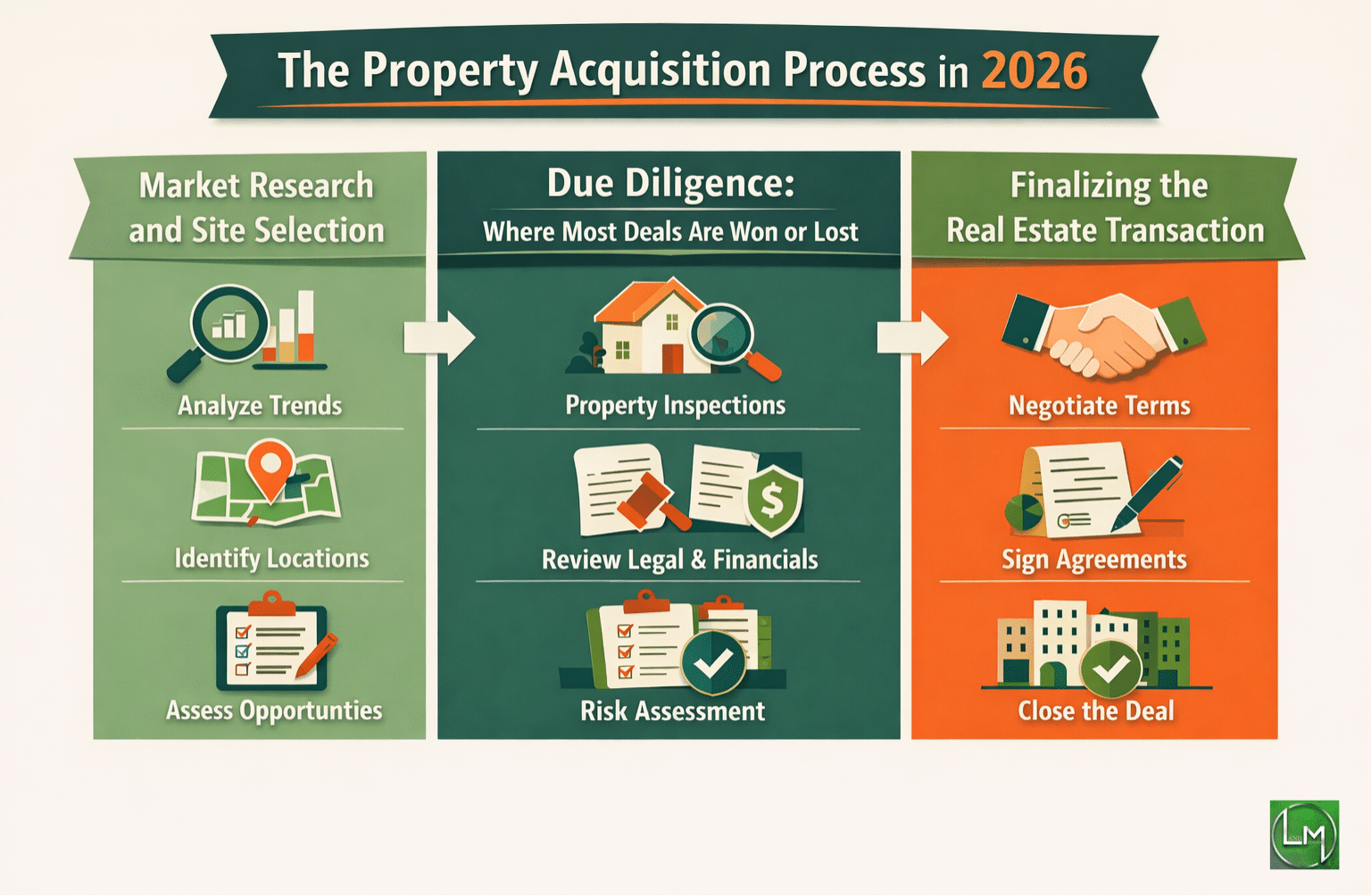
Market Research and Site Selection
Before making a written offer, strong market research is non‑negotiable.
Investors analyze:
- Local market conditions
- Property values and rent trends
- Demand for a specific property type
- Capitalization rate benchmarks
In markets like Los Angeles, for example, prime properties in Commercial Real Estate often trade based on income stability rather than speculation. Investors review rent rolls carefully to understand the difference between actual and projected income.
Site selection also affects long‑term appreciation. Proximity to infrastructure, zoning changes, and development pipelines influence whether a property becomes a stable asset or a stagnant one.
Due Diligence: Where Most Deals Are Won or Lost
Strong due diligence protects buyers from hidden liabilities.
This stage includes:
- Reviewing unpaid taxes
- Examining any Service Contract tied to the property
- Ordering an environmental assessment
- Securing a clear title opinion
- Confirming title insurance coverage
Many investors underestimate this phase. A missed issue, such as zoning restrictions or environmental flags, can affect financing, resale, and asset management strategy.
In Commercial Property acquisitions, especially office buildings or mixed‑use developments, lease administration and existing lease structures must also be reviewed carefully.
Finalizing the Real Estate Transaction
Once due diligence checks out, the focus shifts to negotiation and closing.
Key financial components include:
- Agreed purchase price
- Closing costs
- Acquisition fees
- Title insurance
- Loan structure (if applicable)
This is where discipline matters. Overpaying by even 5% can distort projected cash flow for years.
After closing, ownership rights transfer, and the asset moves into active management.
Managing Real Properties After Acquisition
Efficient Property Management Practices
Acquiring property is only half the equation. Ongoing Property Management and asset management determine whether the investment performs.
An effective post‑acquisition strategy includes:
- Lease renewals at market rate
- Accurate record keeping
- Cash flow tracking
- Maintenance planning
- Tenant retention
For rental property and commercial real estate, cash flow stability often depends more on management quality than on the original purchase.
Smart asset management also involves regular financial analysis to evaluate performance against projections. If operating income falls short, adjustments must happen quickly.
Improving Real Estate Investment Strategies
In 2026, successful investors diversify their real estate portfolios rather than relying on a single asset class.
Some focus on:
- Commercial Real Estate
- Income‑producing rental property
- Mixed‑use commercial property
- Prime properties in stable submarkets
A disciplined acquisition process combined with active asset management reduces risk compared to passive speculation.
Real estate investing today requires more structure than simply reacting to market headlines.
How The Land Method Helps in Real Property Acquisition

At The Land Method, we focus on teaching structured Real Estate Acquisition through education, not theory.
Our courses are led by active investors with decades of experience in real property and Commercial Real Estate. We break down:
- How to evaluate the purchase price properly
- How to conduct due diligence without cutting corners
- How asset management decisions impact long‑term cash flow
- How to align acquisitions with clear investment goals
Students learn how to approach property acquisition methodically, from market research and site selection to closing and management.
We also offer a free consultation for individuals who want clarity before committing capital. The focus isn’t hype. It’s education and process.
In a market where financing costs fluctuate and market conditions shift quickly, structured learning often becomes the difference between reactive buying and strategic acquisition.
Property acquisition in 2026 requires patience, discipline, and structure.
Strong due diligence protects capital.
Accurate financial analysis protects cash flow.
Effective asset management protects long‑term value.
For investors serious about building real property wealth, especially in Commercial Real Estate, understanding the full acquisition process is no longer optional.
And for those who want formal guidance, our real estate investment courses are designed to teach exactly that: how to approach real estate acquisition with clarity and long‑term intent.
Get in touch with us today!

FAQs
Q1. What is the meaning of property acquisition?
A1. Property acquisition refers to the process of purchasing or acquiring ownership of real estate, such as land, residential, or commercial property, for personal use or investment purposes.
Q2. What does acquire mean in property?
A2. To acquire property means to legally obtain ownership or control of a real estate asset through purchase, transfer, or other lawful means.
Q3. What does a property acquisition company do?
A3. A property acquisition company identifies, evaluates, and helps purchase real estate on behalf of investors or clients, often handling market research, negotiations, and due diligence.
Q4. What does it mean to acquire property?
A4. Acquiring property means securing ownership of real estate with the goal of using it, renting it for income, or holding it for long-term appreciation in value.

Ginis Garcia is a seasoned real estate investor with over 14 years of experience helping both new and experienced investors achieve their goals in the housing and land markets. He started doing deals here and there in 2008. In 2011, He started working for a major real estate investor. He got his real estate license in 2012.