

You just closed on a piece of vacant land. The price was right, the location checked out, and you are ready to move forward. Then a neighbor mentions their shed has been sitting three feet over your property line for the past eight years. That shed is now a legal issue, potentially affecting your ownership under adverse possession laws.
What is encroachment? It’s one of the most common boundary disputes land investors face. It is also one of the easiest to miss if you skip proper due diligence. A fence built in the wrong spot, a driveway that crosses the property line, or tree branches hanging over your land can all create legal headaches, reduce property value, and delay or kill a sale.
This guide walks through what encroachment is, the types you will encounter, how to detect it, and what to do when you find it. If you invest in raw land or vacant land, understanding encroachment is not optional. It is part of protecting your land investment from common risks and avoiding costly surprises down the road.
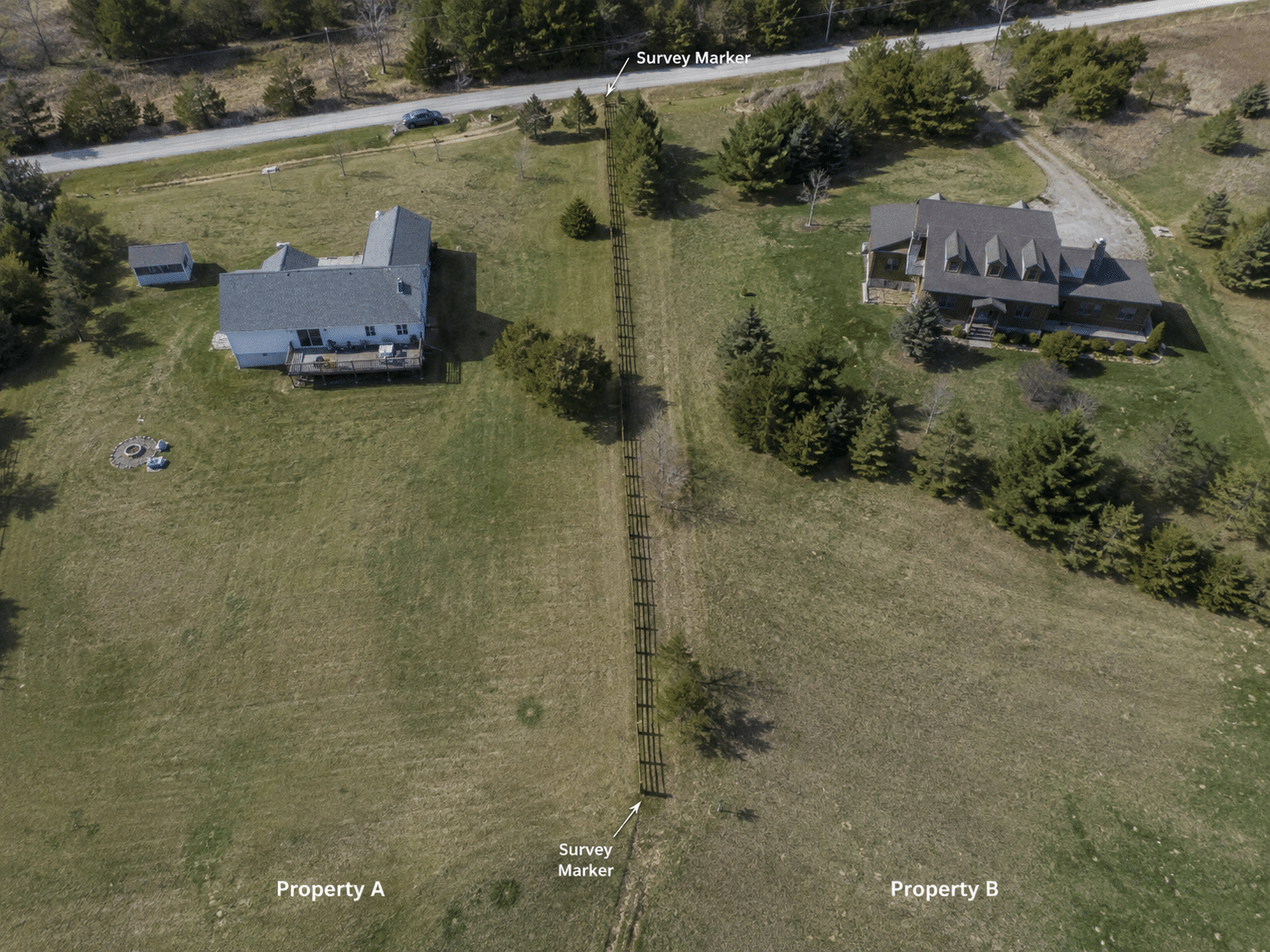
Definition and core meaning of encroachment
What is encroachment in legal terms? It is a violation of property rights. The property owner whose land is being encroached upon has the legal right to demand removal or seek compensation. Encroachment is different from an easement. An easement is a legal right to use someone else’s property for a specific purpose, like a shared driveway or utility access. Encroachment has no legal basis.
Encroachment can cloud title, block financing, and trigger lawsuits. For land investors, encroachment is a red flag that shows up during title review or a boundary survey.
Most encroachment happens by mistake. A neighbor builds a fence based on a guess instead of a survey. A shed gets placed too close to the property line. But intent does not matter in a legal dispute. If the structure crosses the boundary line, it is an encroachment, and the property owner has the right to act. Understanding the legal definition of encroachment is essential for anyone dealing with property boundary issues.
Common types and categories of encroachment
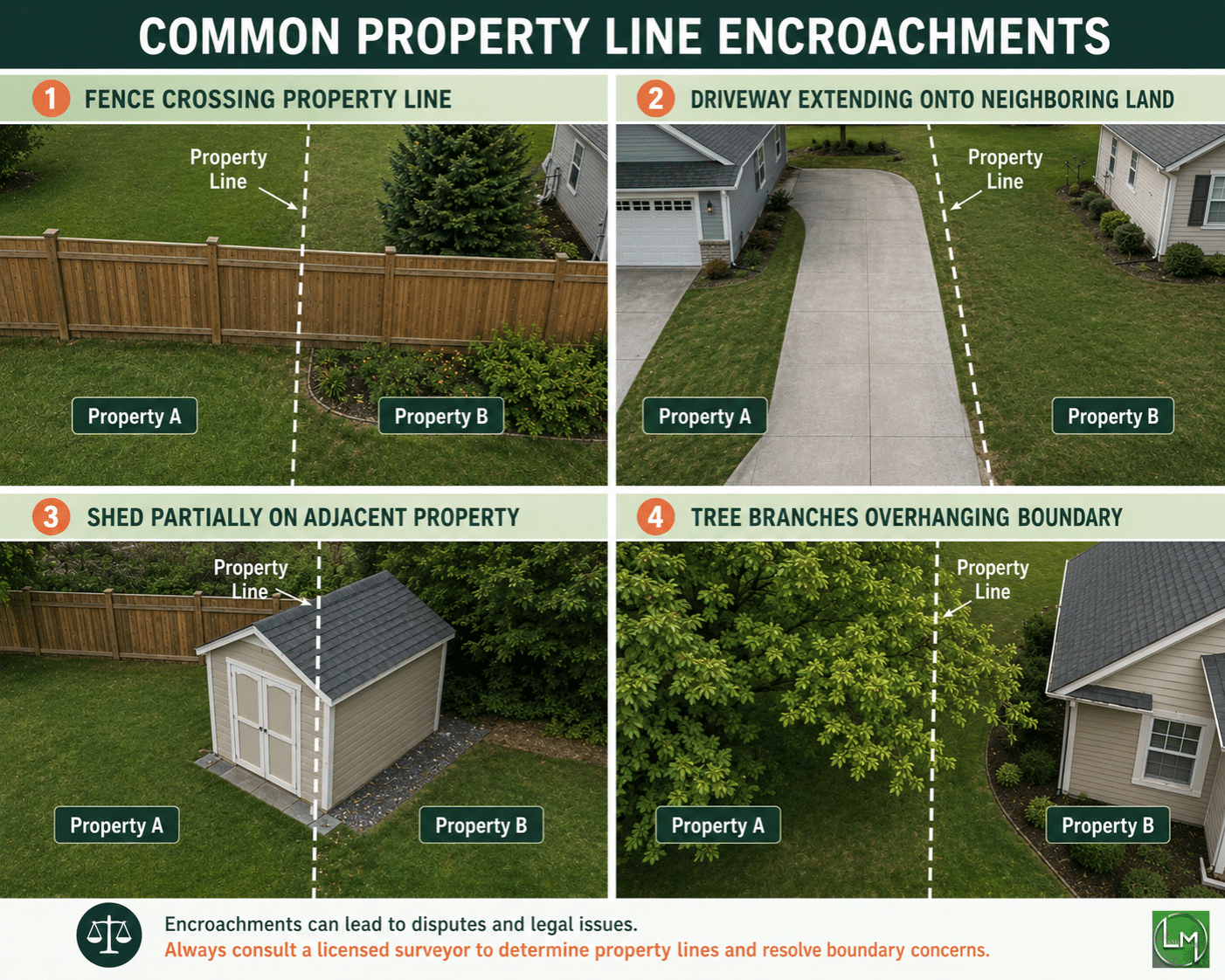
Encroachment comes in several forms. Some are obvious; others are hidden until a professional survey reveals them. Here are the most common types of land investors encounter.
Structural encroachment involves buildings or permanent structures that cross property boundaries. A garage, shed, or addition that extends over the property line is a structural encroachment. These are the most serious because they involve permanent improvements and often require legal action to resolve.
Fence encroachment is one of the most common types. A neighbor installs a fence based on an old survey, a visual estimate, or a property corner they think is correct. Years later, a new boundary survey shows the fence is two, five, or ten feet over the line. Long-standing fence encroachment may trigger adverse possession claims.
Driveway encroachment happens when a paved or gravel driveway crosses onto a neighboring property. This is common in rural areas where driveways are long and property lines are not clearly marked. Driveway encroachment can block access, create liability issues, and complicate title insurance.
Overhanging structures include roof eaves, decks, or balconies that extend over the property line. Even if the main structure is on the correct side of the boundary, an overhang is still an encroachment. Overhanging tree branches and roots also fall into this category.
Minor encroachment involves small intrusions, such as a mailbox, landscaping, or a garden bed, that cross the property line by a few inches or feet. While minor, these can still create legal issues and affect property value if not addressed.
Major encroachment involves large structures or significant portions of a building on the wrong property. These cases almost always require legal remedies and can make a property unsellable until resolved.
Understanding the type of encroachment you are dealing with helps you choose the right resolution strategy.
How to identify and detect encroachment on your property
You cannot fix encroachment if you do not know it exists. Detecting encroachment requires a combination of document review, physical inspection, and professional surveying.
Documents:
- Review title documents (deed, plat map, legal description) against what’s on the ground.
- Compare boundaries in paperwork with fences, driveways, or structures you see.
On-Site Checks:
- Walk property lines and look for anything crossing boundaries.
- Talk to neighbors about boundary history or informal agreements.
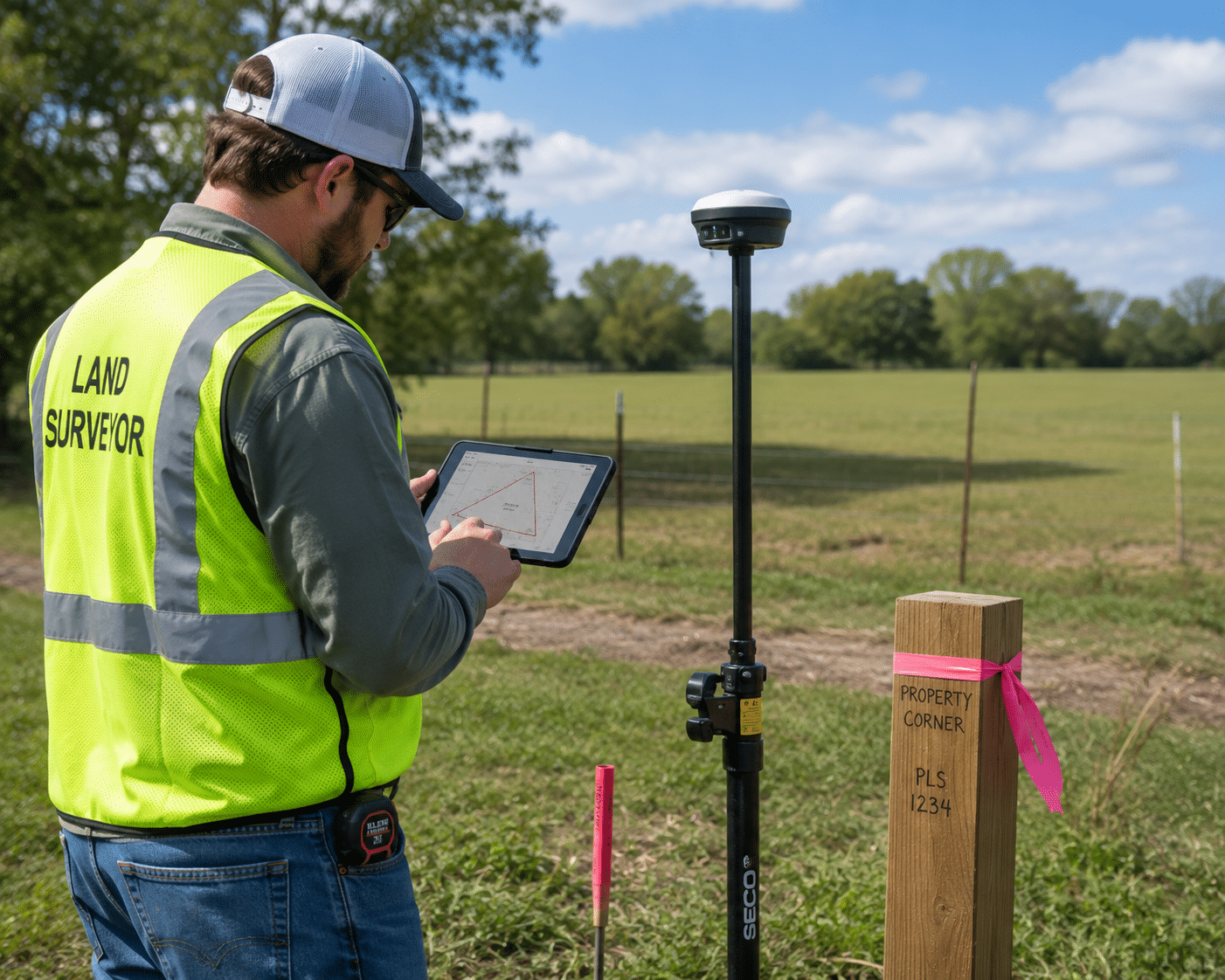
- Check survey markers (pins/stakes). Replace if missing or moved.
- Use aerial photos/GIS maps for initial checks, but confirm with a survey.
Professional Surveys:
- Order a boundary survey — the only legally defensible way to confirm encroachment.
- Don’t rely on old surveys; boundaries may shift over time.
- If buying land, make the purchase contingent on a clean survey to avoid inheriting disputes.
The role and importance of land surveys and boundary surveys
Think of a boundary survey as your insurance against disputes.
- A boundary survey maps exact property lines, corners, easements, and encroachments.
- It’s the only legally defensible proof of boundaries.
- Protects buyers by revealing encroachment before closing, satisfying lenders/title insurers, and providing evidence in disputes.
- Order one before buying, building, fencing, or if a neighbor disputes boundaries.
- Costs range from a few hundred to several thousand – far less than fixing encroachment later.
- Not all surveys are equal: specify a boundary survey (not just property/topographic).
- Skipping a survey risks reduced property value, blocked financing, and legal liability.
- If encroachment is found: negotiate a price reduction, require resolution before closing, or walk away.
Common causes and reasons encroachments happen
Encroachment usually happens by accident, but the results are the same as if it were intentional. Understanding why encroachment occurs helps you avoid it and recognize it faster.
Lack of a professional survey. Most encroachment occurs because someone built a fence, shed, or driveway without first ordering a boundary survey. They guessed where the property line was, or they relied on an old survey that was no longer accurate.
Relying on visual estimates. Property owners often assume they know where the boundary line is based on trees, fences, or other landmarks. These visual estimates are almost always wrong.
Misinterpreted property markers. Survey markers can be damaged, moved, or buried over time. A property owner might find an old marker and assume it is accurate, when in fact it was placed incorrectly or has shifted.
Informal agreements between previous owners. Two neighbors might agree to let a fence stay in place even though it is over the line. When the property changes hands, the new owner may not be aware of the informal agreement, and the encroachment becomes a legal issue.
Changes in property boundaries over time. Erosion, accretion, and natural events can shift property boundaries, especially near water.
Poorly marked rural properties often lead to unintentional encroachment. This is particularly common with rural land investments where boundaries may span large distances.
Assumptions during construction. Contractors and builders sometimes assume the property line is in a certain location without verifying it. By the time the mistake is discovered, the structure is already built.
Adverse possession claims. In some cases, encroachment is intentional. A neighbor may knowingly use part of your land, hoping to claim it through adverse possession once the statutory period has passed.
Preventing encroachment starts with a professional boundary survey before any construction, fencing, or development.
Adverse possession and how encroachment can become legal ownership
Adverse possession is a legal doctrine that allows someone to claim ownership of land they do not legally own if they meet certain conditions. Encroachment can lead to adverse possession if the encroaching party uses the land openly, continuously, and without permission for a specific period.
Each state has its own adverse possession laws, including the time period required to make a claim. In some states, the period is as short as five years. In others, it is 20 years or more. The requirements typically include:
Open and notorious use. The use of the land must be visible and obvious, not hidden or secret.
Continuous use. The encroaching party must use the land continuously for the entire statutory period.
Exclusive use. The person claiming adverse possession must be the only one using the encroached area.
Hostile use. The use must be without the property owner’s permission.
Actual possession. The person must physically occupy or use the land, not just claim it.
If all these conditions are met for the required time period, the encroaching party can file a lawsuit to claim legal ownership of the encroached area. Adverse possession laws often favor active use of land over absentee ownership.
How does this affect land investors?
If you buy property with an existing encroachment that has been in place for years, you may face an adverse possession claim from the neighbor.
Preventing adverse possession claims requires action. If you discover encroachment, address it immediately. Send a formal letter to the encroaching party stating that they do not have permission to use your land. File a lawsuit if necessary to remove the encroachment. Document everything.
Some property owners grant written permission for the encroachment to remain in place. This stops the adverse possession clock because the use is no longer hostile. However, granting permission can create other problems, like reducing property value or making it harder to sell.
If you are buying land and the survey shows encroachment, ask how long it has been there. If the encroachment has been in place for most or all of the statutory period, you may be buying into an adverse possession dispute.
Adverse possession laws vary widely by state. Some states require the encroaching party to pay property taxes on the disputed land. Others do not. Research your state’s laws or consult a real estate attorney before making decisions about encroachment.
Legal remedies and resolution options for encroachment disputes
When you discover an encroachment on your property, you have several legal remedies and options for resolution. The right choice depends on the type of encroachment, the relationship with the neighbor, and the impact on your land investment. Many property boundary disputes can be resolved through proper legal channels and professional guidance.
Negotiation and informal resolution. Start with a conversation. Many encroachment disputes can be resolved without lawyers or lawsuits. Explain the issue, show the survey, and propose a solution.
Easement agreement. If removing the encroachment is not practical, you can grant an easement that allows the neighbor to keep the structure in place. The easement should be in writing, recorded with the county, and include any compensation or conditions.
Monetary compensation. You can negotiate a one-time payment or ongoing rent in exchange for allowing the encroachment to remain.
Boundary line adjustment. In some cases, both parties agree to adjust the property line so the encroaching structure is now on the correct side. This requires a new survey, a legal agreement, and recording the change with the county.
Demand for removal. If negotiation fails, you can formally demand that the encroaching party remove the structure. Send a written notice citing the survey and your property rights.
Injunctive relief. If the encroaching party refuses to remove the structure, you can file a lawsuit seeking injunctive relief. This is a court order requiring the removal of the encroachment.
Damages. You can sue for monetary damages if the encroachment has reduced your property value, caused financial loss, or interfered with your use of the land.
Quiet title action. If encroachment has led to an adverse possession claim, you may need to file a quiet title action to resolve the dispute and clear your title.
Title insurance claim. If you purchased title insurance and the encroachment was not disclosed, you may be able to file a claim. Title insurance policies can cover legal fees, settlement costs, or loss of property value due to encroachment.
Which legal remedy should you choose? Start with negotiation. It is faster, cheaper, and less adversarial than a lawsuit. If negotiation fails, consult a real estate attorney to evaluate your options.
Ignoring encroachment strengthens adverse possession claims.
For land investors, encroachment resolution is part of due diligence. If you are buying property with known encroachment, negotiate a price reduction or require the seller to resolve the issue before closing. The Land Method helps investors identify these issues during the acquisition phase by providing survey coordination and title review services that catch encroachments before they become a problem.
Impact of encroachment on property value and marketability
Encroachment is a deal‑killer if not addressed during due diligence.
Reduced property value. Encroachment can lower property value by limiting usable land, creating legal uncertainty, and requiring costly resolution.
Difficulty obtaining financing. Most lenders will not approve a loan on property with unresolved encroachment. The lender views encroachment as a title defect that increases the risk of default or legal disputes.
Title insurance problems. Title insurance companies may refuse to insure a property with known encroachment, or they may exclude the encroached area from coverage.
Delayed or failed sales. Encroachment discovered during a real estate transaction can delay closing while the issue is resolved. If resolution takes too long or is too expensive, the buyer may cancel the contract.
Legal liability. Encroachment can create liability if someone is injured on the encroached area or if the encroachment damages the neighboring property.
Impact on development plans. If you plan to build, subdivide, or develop the land, encroachment can block your plans. Setback requirements, zoning rules, and building codes all depend on accurate property boundaries.
How do you protect property value when encroachment is present? Resolve the issue before listing the property for sale. If you are buying, make sure the seller resolves encroachment before closing, or negotiate a significant price reduction to cover your costs. This is a critical part of conducting thorough due diligence before acquisition.
Always order a boundary survey and review title documents before making an offer. If you are selling vacant land or raw land, disclose any known encroachment to potential buyers. Failure to disclose can lead to lawsuits, contract cancellations, and damage to your reputation.
Encroachment limits usable land, reducing investment returns.The best way to protect property value is to prevent encroachment in the first place. Order a boundary survey before building, fencing, or developing. Respect property boundaries and require your contractors to do the same.
Many assume encroachment only matters if you plan to sell soon. In reality, unresolved encroachment strengthens adverse possession claims with each passing year, potentially resulting in the permanent loss of land regardless of your sale timeline.
Understanding what encroachment is and how to protect your land investment requires proactive due diligence, professional surveys, and prompt action when issues arise. Whether you are buying raw land, developing vacant property, or managing rural acreage, encroachment can significantly impact your investment returns and legal rights.
The Land Method specializes in helping investors navigate complex property issues, such as encroachments, through detailed title reviews, survey coordination, and acquisition support. If you are evaluating a land investment or dealing with boundary concerns, explore your options with our team to protect your investment from the start.
FAQs
Q1. What is the legal definition of encroachment?
A1.
Unauthorized intrusion onto another’s property by a structure, object, or improvement crossing boundaries without permission.
Q2. How do I know if there is encroachment on my property?
A2.
Order a professional boundary survey. It’s the only reliable way to confirm if structures or fences cross your property line.
Q3. How long does someone have to use my land before they can claim it?
A3.
Depends on state adverse possession laws typically 5 to 20+ years of open, continuous, exclusive, and hostile use.
Q4. Can encroachment affect my ability to sell my property?
A4.
Yes. Buyers, lenders, and title companies often require resolution before closing.
Q5. What should I do if my neighbor’s fence is on my property?
A5.
Confirm with a survey, then negotiate solutions such as moving the fence, granting an easement, or compensation.
Q6. What is a minor encroachment versus a major encroachment?
A6.
Minor = small intrusions (mailbox, landscaping). Major = large structures or significant portions of buildings crossing boundaries.
Q7. How do I prevent encroachment when building on my land?
A7.
Always order a boundary survey before construction or fencing, and ensure contractors follow it.

Ginis Garcia is a seasoned real estate investor with over 14 years of experience helping both new and experienced investors achieve their goals in the housing and land markets. He started doing deals here and there in 2008. In 2011, He started working for a major real estate investor. He got his real estate license in 2012.