

A new investor in West Texas bought a 5-acre parcel sight unseen for $4,200; sure, he had a $15,000 flip on his hands. Then he learned the lot was landlocked with no legal access, and the county wouldn’t approve a driveway easement. That parcel still sits unsold three years later. Land flipping works, and it works well, but stories like that are why systems beat hype every time. This land investing guide walks through the full process. You’ll learn how flipping land works, how to find and price deals, how to fund acquisitions, and how to build a land flipping business that repeats instead of getting lucky once.
What land flipping is and how it works
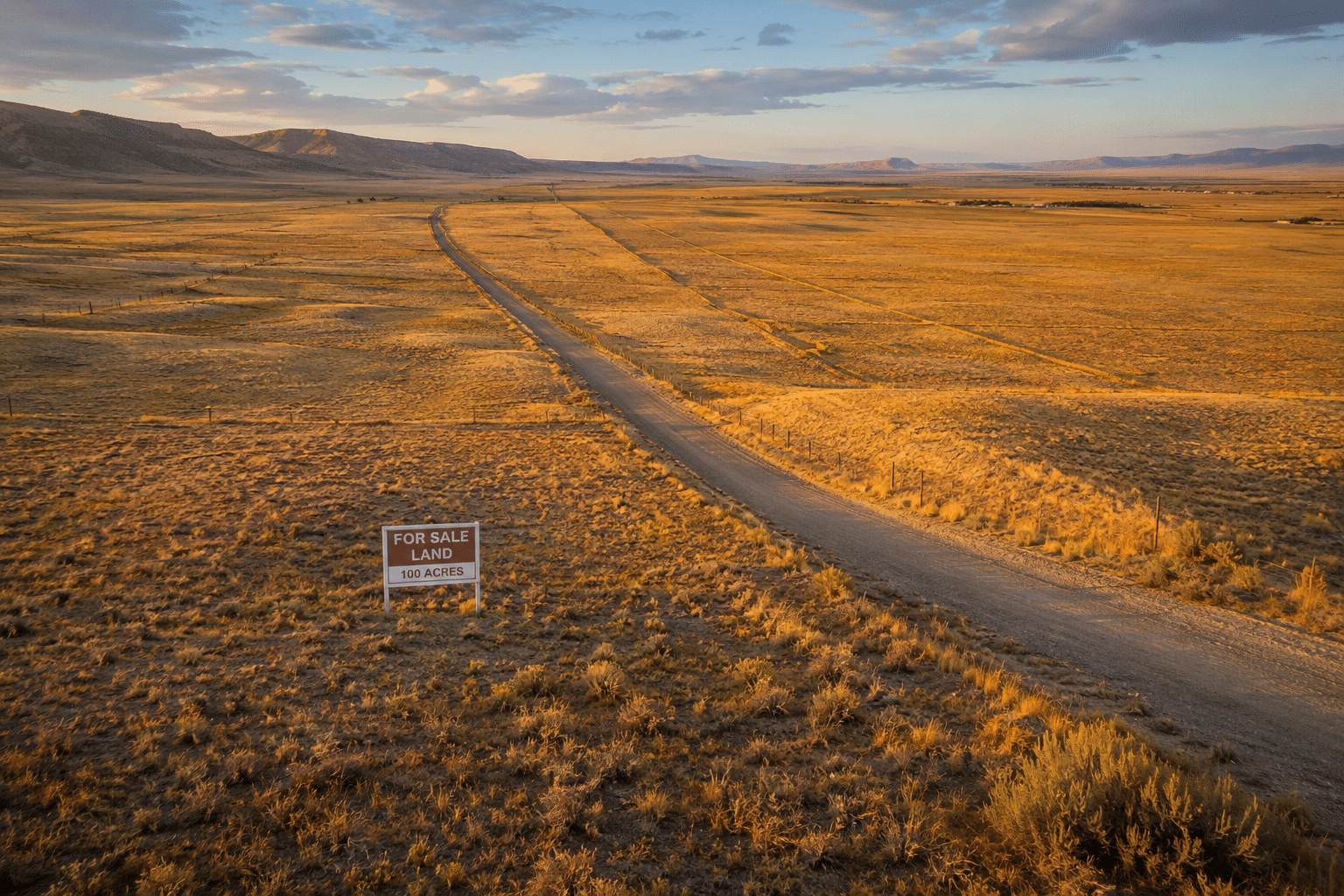
Land flipping means buying raw land below market value and reselling it for a profit, usually without building, grading, or improving anything physical. You are not a developer. You find the gap between what an owner will accept and what a buyer will pay. That gap exists because vacant land is illiquid, owners forget they own it, and most agents don’t want to list a $7,000 rural lot. If you’re weighing whether land is actually a good investment, this gap is the core of why it can be.
The land flipping process looks simple on paper. You find motivated sellers, make offers below market, close the acquisition, then sell land for profit. The reality is that each step has ways to go wrong, and the process punishes shortcuts. Land doesn’t generate income while you hold it, so a deal that takes too long to sell quietly eats your return.
Many assume you need a license to flip land. In reality, you can buy and sell property you own without one, the same way any owner can sell their own house. The legal requirements live in your state’s licensing statute, so confirm the specifics where you operate before building a land flipping business. Land investing stays attractive because it sidesteps tenants, contractors, and toilets. According to the U.S. Bureau of Land Management, the federal government alone administers roughly 245 million acres. That’s a reminder of how much land exists outside the typical housing conversation.
Market research and selecting an area
Picking the wrong county will sink a land investing business faster than any single bad deal. The market does the heavy lifting. Finding the right properties means targeting areas with real buyer demand, reasonable transaction volume, and prices low enough to leave margin. Skip markets where nothing sells and you’ll skip the trap of buying inventory nobody wants.
Start your market research with county-level sales data. Look at how many vacant parcels actually closed in the last 12 months, what they sold for per acre, and how long they sat. A county with 200 vacant land sales a year and steady pricing is workable. One with 11 sales a year is a graveyard for your capital. Slow flips almost always trace back to a thin market chosen without data, because a parcel only sells as fast as the local buyer pool turns over.
Rural and exurban counties in growing states tend to offer the best blend of cheap entry and active demand. Recreational land, off-grid parcels, and lots near expanding metros all move when priced right.
Marketing for motivated sellers and generating leads
Deal flow is the engine of any land investing business, and it comes from consistent marketing to motivated sellers. The people most likely to sell vacant land cheap are absentee owners, heirs who inherited a parcel they’ve never seen, and owners behind on property taxes. They aren’t browsing for the highest price. They want the headache gone.
Direct mail still delivers the strongest results and is central to finding the right properties for most investors. You pull a county list of out-of-state owners, filter by acreage and parcel type, then send a simple letter or postcard with an offer range or a phone number. Response rates are low by design, often 1 to 3 percent, but the people who call back are genuinely motivated. Direct mail beats scattershot online ads because you control exactly who receives it, so every dollar lands in front of an owner who already fits your criteria.
Beyond mail, you can process leads from county tax-delinquent lists, Craigslist, and Facebook Marketplace. The key is consistency. One mail drop produces a trickle. A repeatable monthly campaign produces predictable deal flow. Most beginners send a single batch, get discouraged, and quit before the numbers have a chance to work. A real land investing business treats lead generation as an ongoing system, not a one-time experiment.

Pricing offers and making offers conservatively
Overpaying is the single fastest way to lose money flipping land. The fix is boring and effective. Use conservative numbers on every offer. The standard approach is to offer a fraction of the comparable sale price, often between 25 and 50 percent of what similar parcels recently closed for. That leaves room for resale price, holding costs, and a buffer.
When making offers, anchor to actual sold comps, not asking prices. Asking prices are fantasy. Sold prices are reality. Pull at least three to five recent sales of similar acreage nearby. Then work backward from a resale number you’re confident you can hit quickly. Investors who price off optimistic listings overpay and watch the parcel sit because the math never worked. Making offers off the key questions to ask before buying land keeps your number grounded in reality.
A clean offer process protects you. Many investors send blind offers based on the assessed value, then verify the details only after the seller says yes. That’s fine, as long as you keep your initial numbers conservative enough to absorb a title or access problem you discover later. Pricing offers conservatively isn’t pessimism. It’s how you stay solvent across dozens of deals when a few go sideways, because one buffer-protected miss won’t wipe out the gains from the deals that close clean. Conservative offers are what make it profitable to flip land at scale, not just once.
Financing and acquiring the land
One reason land flipping appeals to beginners is that you can start with far less capital than house flipping requires. A lean operation buying $3,000 to $5,000 rural lots can run on a few thousand dollars total, including marketing. You don’t have to secure financing from a bank to get going. That removes the biggest barrier most new investors face.
There are several ways to fund acquisitions as you grow. Some investors use cash for small parcels, then graduate to private lenders or partners for a larger land deal. Self-directed IRAs are another route to buy land with retirement funds, though the rules are strict and worth reviewing with a qualified custodian first.
Seller financing cuts both directions and is one of the most useful tools in land investing. On the buy side, a motivated seller may allow you to pay over time, reducing the upfront cash required. On the sell side, offering seller financing to your buyer widens your pool and can create passive income while you wait for full payoff. Closing the acquisition is straightforward for clean, low-value parcels. Many investors close in-house with a deed and a notary, while higher-value deals are handled by a title company. When you can’t pay cash and need to secure financing, the trade-off is cost versus protection. Closing through title gives you insurance and a clean chain, which matters more as parcel values climb.
Listing, marketing, and selling the property for profit
A parcel you can’t sell isn’t an asset. It’s a liability with a tax bill. Selling fast is where you actually realize the profit, so treat your listing marketing as seriously as your acquisition. The goal from day one is closing the sale at a price and speed that match the conservative numbers you used when you bought.
List land for sale everywhere buyers look: Facebook Marketplace, Craigslist, Zillow, dedicated land platforms, and your own buyer list if you’ve built one. Good photos, clear acreage, GPS coordinates, and an honest description of access and zoning do most of the selling. The single biggest accelerator is price. Land for sale priced at 60 to 80 percent of comparable value moves quickly, and a fast flip beats a slow one even at a lower margin.
Offering seller financing on the resale dramatically expands your buyer pool, since many land buyers can’t or won’t get a traditional loan for raw land. You collect a down payment, then monthly payments, turning one deal into a steady income stream. When you realize a gain, it pays to understand IRS guidance on capital gains and property sales so your tax planning aligns with your sale structure. Closing the sale can happen the same way you bought, in-house or through title, depending on value. The investors who consistently sell land for profit are the ones who priced right at acquisition and marketed aggressively the moment they took ownership.
Profitability, pros, and cons of land flipping
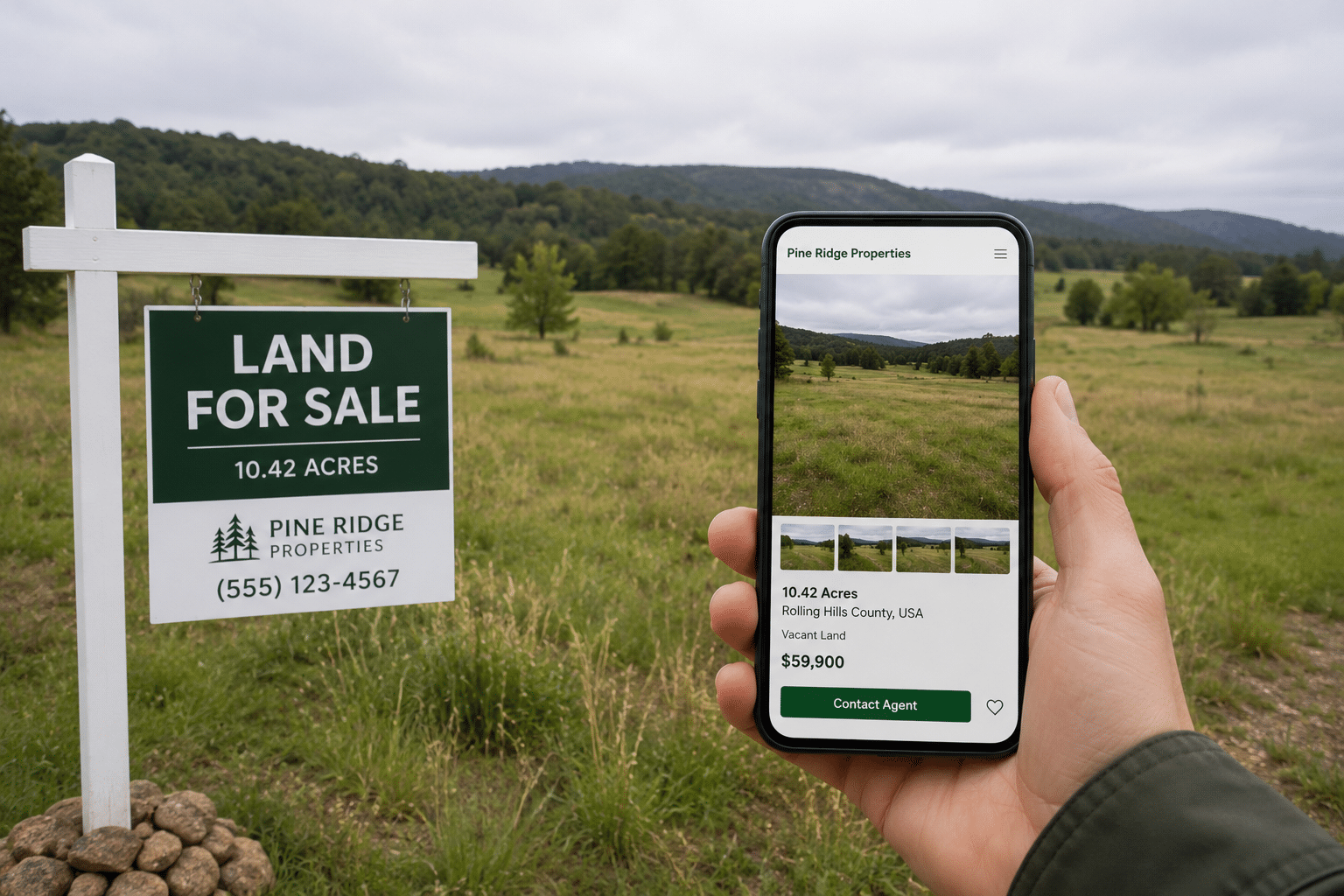
Profit per land deal typically ranges from $5,000 to $25,000, with rural flips on the lower end and larger or better-located parcels reaching higher levels. Those are real-world ranges, not promises. Results depend on your market, pricing discipline, and deal flow. Some deals lose money when due diligence misses something.
The pros and cons of land flipping are worth stating plainly. On the plus side: low startup capital, no tenants, no renovations, no contractors, and a real estate investment strategy that scales with systems rather than physical labor. Vacant land carries low holding costs, and the lack of competition in many rural markets keeps margins healthy. Understanding the different types of land you can invest in helps you match those advantages to the parcels that fit your goals.
The cons are just as real, and any honest list of the pros and cons of land flipping includes them. Land is illiquid, so a parcel can sit for months if you misjudge demand or price. Marketing requires upfront spend before any deal closes. Due diligence mistakes, like buying landlocked or wetland-encumbered property, can leave you holding unsellable inventory, so confirm access and zoning before you commit. Zoning rules, access requirements, and recording procedures vary by jurisdiction, so verify each parcel against your local zoning board and the relevant county recorder, or work with a qualified real estate attorney, before you commit. And nobody hands you a deal. The work of generating leads, vetting parcels, and closing the sale is ongoing. Anyone selling land investing as effortless income is selling a fantasy. The honest pitch is that it’s a legitimate business that rewards consistency, not a shortcut to financial freedom.
Building repeatable systems and follow-up workflows
The difference between someone who flips one parcel and someone who runs a land flipping business is systems. A single deal can happen by luck. Predictable deal flow only happens when you turn each step into a documented, repeatable process: list pulling, mailing, lead intake, due diligence, offers, closing, and resale.
Follow-up systems are where most money hides. The first conversation with a motivated seller rarely closes. Owners think it over, talk to family, or simply forget to call back. Investors who track every lead and follow up over weeks and months close deals their competitors abandoned after one call, because motivation often arrives on the seller’s timeline, not yours. Leaked profit almost always traces back to missing follow-up systems, not a lack of leads.
A simple CRM, even a well-organized spreadsheet at first, lets you process leads consistently and never lose track of a warm prospect. Templates for offers, deeds, and purchase agreements cut your time per deal and reduce errors. This is where structured education earns its keep. The-land-method provides downloadable due diligence playbooks and documented workflows so you’re not rebuilding every process from scratch, and the Land Investing Jumpstart course packages those systems for new investors. Scaling the business depends entirely on systems that run the same way every time, no matter how many deals you’re juggling.
Using multiple land strategies instead of one method
Single-strategy investors get crushed when the market shifts. The investors who last use multiple land flipping strategies for vacant land so they’re never dependent on one source of profit. Wholesaling assignments, fix-and-flip-style improvements like clearing or subdividing, buy-and-hold for appreciation, and seller-financed resales each work in different conditions.
Seller financing alone opens a real estate investment strategy most beginners ignore. Instead of one $12,000 payout, you can structure a parcel for a down payment plus 60 monthly payments, turning a single flip into years of cash flow. Some investors keep a portion of their inventory in seller-financed notes specifically to build steady income alongside their faster cash flips.
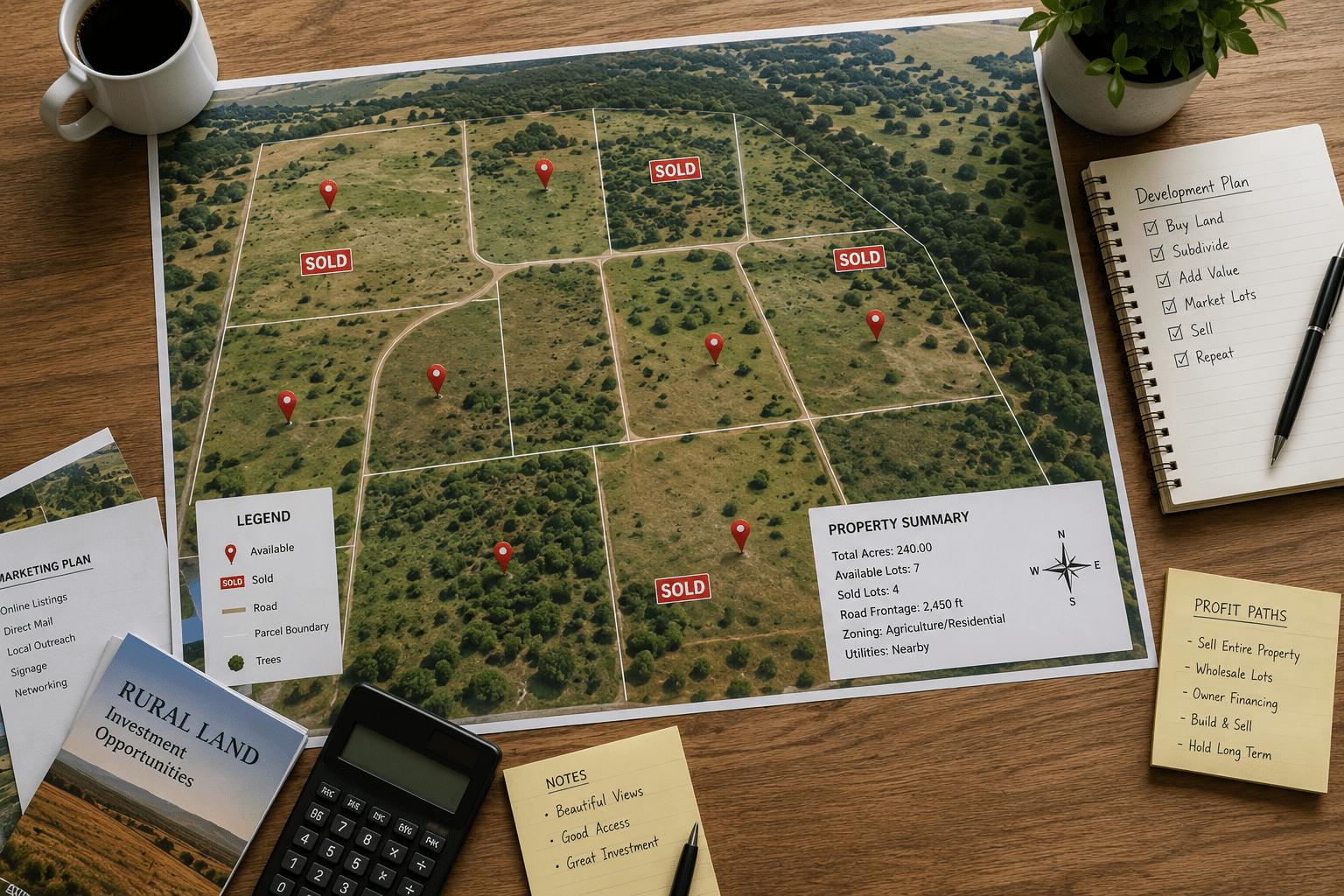
Subdividing is another lever. Buy a larger parcel, split it into smaller lots that match local buyer demand, and the combined sale price often exceeds the whole. These land flipping strategies matter because they build resilience. When cash buyers dry up, your seller-financed deals keep moving. When a market cools, your buy-and-hold parcels keep appreciating. Teaching a single rigid method trips up so many course buyers. Real land investing adapts to what’s working right now, and that flexibility separates a durable business from a one-trick approach that stalls the moment conditions change.
How to choose credible land education and avoid hype
The land investing space is crowded with educators promising overnight results. Here’s the quickest filter. Ask whether the person teaching is still actively doing deals today or coasting on tactics that worked five years ago. Markets shift. A land-investing guide built on outdated assumptions will yield outdated results.
Be skeptical of anyone promising guaranteed profits, zero risk, or easy money. Those phrases are marketing, not education. Real instruction emphasizes conservative numbers, due diligence, the legal requirements that protect each transfer, and the unglamorous systems that produce long-term success. Look for educators who teach multiple strategies, share real-deal examples with honest context, and admit that results depend on your execution and your market. The best programs back that up with investor-led coaching and mentorship so you have support when a deal gets complicated.
Practical tools matter more than motivation. A program that hands you actual due diligence checklists, offer templates, and follow-up workflows is worth far more than one selling hype and a vague promise. When you’re learning how to start flipping land, prioritize current, implementation-focused training over polished sales pitches. Knowing how to start the right way shortens your learning curve and helps you avoid the expensive mistakes that sink beginners, like the landlocked parcel that never sells.
If you want a clear path from your first lead to closing the sale, book a 15-minute strategy call and get an honest read on where to start. The team teaches from a business that’s completed over 1,500 land deals and is still actively investing today, so the guidance reflects what’s working in the current market, not theory from years ago.

FAQs
Q1. What is land flipping and how does it actually work?
A1.
Land flipping is buying undeveloped or vacant land at below-market value and reselling it for a profit, usually without building or renovating. Value comes from finding undervalued parcels and adding leverage through actions such as resolving title issues, securing favorable zoning, or improving the property’s marketing to the right buyer.
Q2. Is land flipping worth it compared to house flipping?
A2.
Land flipping avoids the renovation costs, contractors, and cost overruns that come with house flipping, and entry costs are typically lower. House flips can produce larger dollar profits per deal, but they carry more capital risk and complexity, so the better fit depends on your budget and how hands-on you want to be.
Q3. Is land flipping legal?
A3.
Yes, land flipping is legal when you acquire property through legitimate sales, disclose accurately, and follow your state and county rules for transfers and taxes. Problems arise from misrepresentation or omissions in disclosures, which is why title research and due diligence matter in every deal.

Ginis Garcia is a seasoned real estate investor with over 14 years of experience helping both new and experienced investors achieve their goals in the housing and land markets. He started doing deals here and there in 2008. In 2011, He started working for a major real estate investor. He got his real estate license in 2012.