

If you’ve ever looked at a vacant parcel and wondered whether it’s possible to build on it, the answer is yes, but only if you understand how to work with unimproved land the right way. Many of the most profitable deals we see in today’s market come from vacant, unimproved lots that others overlook simply because they lack some of the basic utilities.
At The Land Method, we work with unimproved and vacant land daily, the kind of parcels most investors overlook because they don’t know where to start.
Our goal is simple: help you understand the numbers, the zoning, and the real market value before you commit.
Here’s what we focus on inside the Land Riches Blueprint: Coaching Edition:
- Zoning clarity: Identifying what’s legally buildable and what’s restricted.
- Access verification: Confirming road access, utility proximity, and any easement requirements before contract signing.
- Market velocity: Evaluating whether the area supports quick resale or long-term appreciation.
- Financing structure: Choosing between seller financing, lot loans, or short-term raw land loans based on your exit plan.
Irrespective of whom you plan to sell to, whether to a homebuilder, subdivide for residential development, or hold for long-term equity growth, your success depends on disciplined due diligence and precise cost forecasting from day one.
As urban and suburban land prices continue to rise through 2026, unimproved lots remain among the most flexible and high-upside opportunities in the land investment market, offering even more lucrative returns with low capital requirements.
What Is Unimproved Land and Its Characteristics?
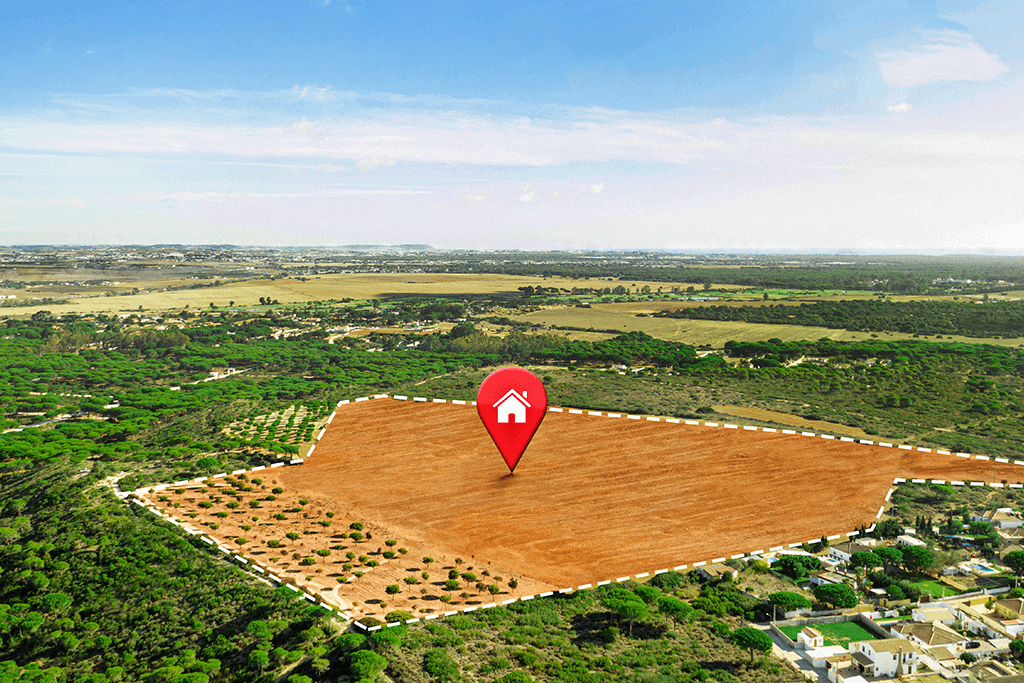
Unimproved land refers to a piece of land that has not been developed or prepared for construction. Unlike residential lots in established neighborhoods, this type of land comes without essential utilities or infrastructure.
Key characteristics include:
- It lacks basic amenities and infrastructure.
- Under local zoning laws, unimproved lots may qualify for residential, commercial, or agricultural use.
- Buyers typically pay less per square foot compared to developed properties, resulting in a lower upfront cost (when development costs are excluded).
- A better resale price can be quoted if the land is developed and equipped with the necessary development.
Key Differences Between Improved and Unimproved Land
Lack of public utilities and infrastructure
Unimproved land typically has no access to water lines, electricity, natural gas, or sewage systems. You’ll likely need to install a septic system, drill a well, and arrange utility hookups yourself.
Challenges with zoning regulations and land use
Local zoning laws determine how the land can be used. Some parcels may allow only agricultural use, while others permit residential development or even commercial construction.
Potential for raw land development
While the lack of infrastructure may seem like a disadvantage, it actually creates opportunities. Many real estate investors see unimproved land as a blank canvas with strong investment potential.
Common Uses for Unimproved Land
Unimproved land might look like a blank piece of earth, but to a smart investor, it’s potential waiting for direction. Depending on zoning regulations, market demand, and local development trends, these parcels can serve multiple purposes, from residential to recreational.
Residential Development:
For anyone planning to build single-family homes or custom properties, unimproved lots are a clean slate. You decide the layout, handle the utility setup, and control your costs.
Once road access and basic services are in place, values can climb quickly. Many small developers see 25–40% appreciation before the first foundation is poured.
Commercial or Rental Projects:
Well-located unimproved parcels, especially near major highways or growing suburbs, can turn into strong commercial real estate opportunities.
Once connected to public utilities, they’re ready for small offices, rental units, or mixed-use developments. They’re also more affordable and adaptable than pre-developed commercial property.
Rural Investment and Land Banking:
Buying early in rural or low-density areas is a classic long game. As infrastructure and housing expand outward, nearby parcels experience significant increases in land value.
Holding these for three to seven years can turn modest buys into high-return exits; that’s the essence of smart land banking.
Recreational or Agricultural Use:
Not every piece of land needs buildings to earn income. Some buyers turn their lots into hunting land, campgrounds, or weekend retreats with minimal work.
Others improve soil and add irrigation, converting it into farmland that brings steady rent and lower property taxes under agricultural zoning.
Why Building on Unimproved Land Could Be a Good Idea
Buying and developing raw land can be a powerful wealth-building strategy—if done right.
Exploring the Investment Potential
Rising land value and market conditions
Land prices have steadily increased over time. According to the National Association of Realtors, land sales and development demand continue to grow as housing inventory remains tight.
Developing raw land for residential lots
Turning a large plot into smaller residential lots can significantly increase potential returns.
Opportunities for future home construction
You can build exactly what you want, your own home, tailored to your lifestyle, without compromise.
Tax Benefits and Long-Term Returns
- Potential capital gains when selling developed land
- Lower property taxes (initially, compared to developed properties)
- Equity growth through land ownership
For many, buying land is not just a purchase; it’s a long-term financial strategy.
Steps to Take Before You Build on Unimproved Land
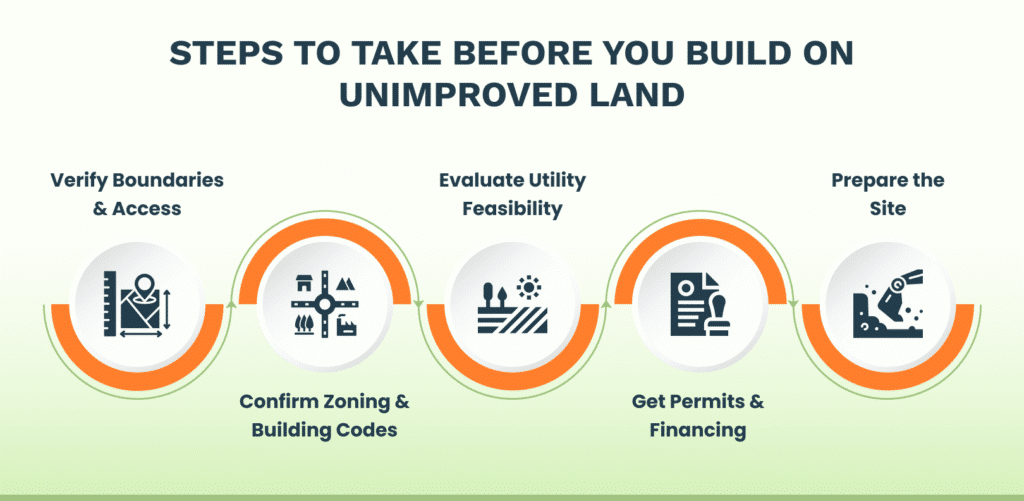
First Step: Conducting Due Diligence
Every successful land purchase begins with proper due diligence. This is the foundation of your entire project and helps you avoid buying a piece of land that can’t be developed.
- Get a Land Survey and Confirm Property Lines
A professional land survey clearly defines your property lines, boundaries, and exact lot size. This prevents disputes with neighbors and ensures your building plans fit within legal limits. It also helps identify easements, access rights, or shared driveways that may affect your construction. - Check Zoning Regulations and Building Codes
Understanding zoning regulations is essential before moving forward. Local zoning laws dictate how the land can be used, whether for single-family homes, agricultural use, or even commercial property. In addition, building codes determine what kind of structure you can build, including height restrictions, square foot requirements, and safety standards.
- Research Local Planning and Restrictions
Reach out to your local planning department to identify any restrictions associated with the property. Some areas may fall within a historic district or an environmental protection zone, or have land-use limitations.
This step ensures that your vision for a new home aligns with what’s legally permitted.
Securing Necessary Permits and Approvals
Once your research is complete, the next step is navigating the approval process. Building on vacant land requires multiple permits, and skipping even one can significantly delay your project.
- Obtain Building Permits from Local Government
Before starting any construction process, you must secure building permits. These approvals confirm that your building plans meet local safety and zoning requirements. - Verify Septic System and Utility Requirements
Most unimproved land lacks access to sewer systems, so installing a septic system is necessary. You may also need permits for:
- Well installation for water
- Electrical connections
- Utility hookups for power and internet
Understanding these requirements early helps you estimate total construction costs more accurately.
- Ensure Road Access and Entry Points
One of the most overlooked factors is road access. Your land should have legal access to a public or county road. If not, you may need to negotiate easements with neighboring property owners, an often complicated and time-consuming process.
How to Finance Your Home on Unimproved Land
Financing unimproved land requires a proper loan structure and proof of feasibility. Here’s how to do it efficiently in 2026.
Choosing the Right Loan Options
- Raw Land Loans: Used for completely undeveloped land with no utilities or road access. High risk means 30–50% down and 8–10% interest rates. Best for long-term holding or raw land development.
- Lot Loans: For parcels with basic infrastructure or zoning approval. Down payments typically average 20–30%, with interest rates ranging from 7–8%. Ideal if you plan to build within a year.
- Construction-to-Permanent Loans: Combine land purchase and home construction into one loan. It transitions to a post-completion mortgage, reducing extra closing costs and simplifying the financing process.
Alternative Financing
- Seller Financing: The simplest route for many land buyers. Expect 10–20% down and monthly payments negotiated directly with the landowner.
- Joint Venture/Partner: Raise capital and pay them a %. Example: they provide the capital, you do the work, and pay them 15% on their money. Partner with another investor and split the profits. Example: they provide the money, you do the work, and split profits 50/50.
- Private or Self-Directed IRA Funding: Increasingly popular among real estate investors, financing unimproved land for future residential development.
These loan types often come with higher interest rates because lenders view undeveloped land as riskier.
Understanding the Financing Process
Payment requirements and closing costs
Expect a larger down payment, sometimes 20% to 50%.
Monthly payment considerations
Higher interest rates can increase your monthly payment significantly.
Consulting lenders about loan types
Different lenders specialize in different land purchase scenarios, so it’s important to compare options.
Match Loan to Strategy
- Flipping? Go short-term with interest-only raw land loans or seller financing.
- Building your dream home? Choose construction-to-permanent to achieve a stable conversion and lower long-term costs.
- Holding for appreciation? Long-term Farm Credit loans or private financing keep monthly payments predictable and flexible.
Challenges of Building on Unimproved Land
A blank canvas, full control, and no builder restrictions! But behind the opportunity are a few realities investors and home builders must plan for early.
Managing Construction Costs and Planning
- Cost of the land plus development expenses
- Creating site plans and building plans
- Installing HVAC systems, water, and power
The construction process is often longer and more complex than building in a developed area.
Overcoming Zoning and Land Use Restrictions
- Local zoning laws may limit your building plans
- Some areas restrict commercial real estate or residential development
- The approval process can take months
Understanding land use restrictions early can save you significant time and money.
We recommend:
The most successful real estate investors working with unimproved land in 2026 are those who plan for setbacks before they start. They verify every permit, utility, and zoning regulation before breaking ground, not after.
How to Find the Perfect Piece of Land
Finding the right unimproved land isn’t about luck; it’s about checking what others skip. A smart investor looks past glossy listings and digs into the details that decide profit or regret.
- Don’t Trust the Listing – Verify Everything
Most “ready-to-build” claims are half true. Use the county GIS map to confirm road access, zoning, and proximity to utilities.
If access isn’t on a county road, expect $8,000–$20,000 in easement or grading costs; factor that in before you commit. - Buy Where Land Moves, Not Where It’s Cheap
Low price doesn’t mean good value. Focus on areas with steady turnover where lots actually sell. In 2026, secondary counties near metro zones (like Rutherford County, NC, or Klamath County, OR) continue to show solid growth without city-level prices. - Confirm What You Can Build- In Writing
Before closing, get written confirmation from the planning department on zoning and building codes.
A parcel zoned “residential” doesn’t always mean buildable setbacks, lot size, or frontage rules can block permits fast. - Test Before You Buy
If you are buying outright. Spend a few hundred on a soil or percolation test to confirm septic feasibility If a property is in an area where septic is needed. It’s better than discovering later that your “dream lot” needs a $20,000 engineered system. Avoid steep slopes or heavy clay soils; they complicate foundations and construction costs. - Negotiate With Data, Not Emotion
After you’ve done your due diligence, use the numbers to your advantage.
If the property lacks utilities, legal access, or permits, use those costs to negotiate. Most landowners respect informed buyers and may offer seller financing or flexible payment terms to close faster.
I need a similar example here, and it can go as a content image or with a real image (only if possible)
Example from Experience:
One of our students recently evaluated a 5-acre unimproved parcel in central Florida listed at $42,000. After verifying that there was no existing road access and that the projected infrastructure costs were $18,000, she negotiated the price down to $22,000 and closed using seller financing. She’ll resell it within a year once the improvements are complete. That’s how you buy smart, not fast.
Tips for Building Your Future Home on Unimproved Land
Building your dream home on raw land requires planning and patience.
- Work with a reliable Home Builder for a custom Home Design
- Plan detailed construction plans before starting
- Budget for utility hookups and infrastructure
- Consider future expansion and resale value
The more prepared you are, the smoother your building process will be.
Making the Best Decision for Your Land Purchase
At the end of the day, buying unimproved land can be a good investment, but only if approached strategically.
- Consult an experienced real estate agent
- Stay updated on land deals through email alerts
- Evaluate long-term investment potential
- Think beyond purchase, focus on development
If done right, this could be one of the best decisions you make for your financial future.
The Smart Way to Approach Unimproved Land in 2026
Unimproved land is untapped leverage.
If you know how to assess zoning, access, and utility feasibility, you can turn a raw parcel into a long-term appreciating asset without paying for someone else’s improvements.
The smartest investors in 2026 aren’t chasing finished lots; they’re creating them.
With proper due diligence, realistic budgeting, and the right financing structure, unimproved land becomes a controllable path to cash flow, capital gains, and portfolio growth.
We teach this process from the ground up, literally helping you evaluate buildability, structure the deal, and plan exits that actually perform in today’s market
Turn overlooked land into a real opportunity.
At The Land Method, we don’t just teach theory; we show you exactly how to evaluate, acquire, and profit from unimproved land in today’s market.
Get in touch with us to start building your land-investing strategy.
Unimproved land is untapped leverage.
If you know how to assess zoning, access, and utility feasibility, you can turn a raw parcel into a long-term appreciating asset without paying for someone else’s improvements.
The smartest investors in 2026 aren’t chasing finished lots; they’re creating them.
With proper due diligence, realistic budgeting, and the right financing structure, unimproved land becomes a controllable path to cash flow, capital gains, and portfolio growth.
We teach this process from the ground up, literally helping you evaluate buildability, structure the deal, and plan exits that actually perform in today’s market.
FAQs
Q1. What’s the biggest advantage of unimproved land?
A1. Lower entry costs and full control. You decide how and when to develop, which allows better margins than buying pre-improved property.
Q2. How do I confirm if a parcel is buildable?
A2. Pull county zoning maps, confirm road access, and request a utility feasibility report. Never rely on listing descriptions; Call the county planning department.
Q3. What financing options work best for unimproved land?
A3. Start with raw land loans or lot loans. When improvements begin, convert to a new construction loan or seller financing for better flexibility and lower upfront costs.
Q4. What are the biggest hidden costs?
A4. Utility extensions, septic installation, and permit fees. Always factor these in before calculating ROI many buyers underestimate infrastructure costs by 25–30%.
Q5. Is unimproved land a safe investment in 2026?
A5. Yes, if you’re patient and data-driven. Focus on parcels near infrastructure growth or zoning transitions, that’s where land value compounds fastest.

Ginis Garcia is a seasoned real estate investor with over 14 years of experience helping both new and experienced investors achieve their goals in the housing and land markets. He started doing deals here and there in 2008. In 2011, He started working for a major real estate investor. He got his real estate license in 2012.