

If you invest or work in real estate long enough, you eventually run into non-disclosure states, and they change how you think about pricing almost immediately. In these states, the sale price of a property is not part of the public record. You can see that a property was sold, but not the purchase price, the actual home sale prices, or the final real estate sale prices.
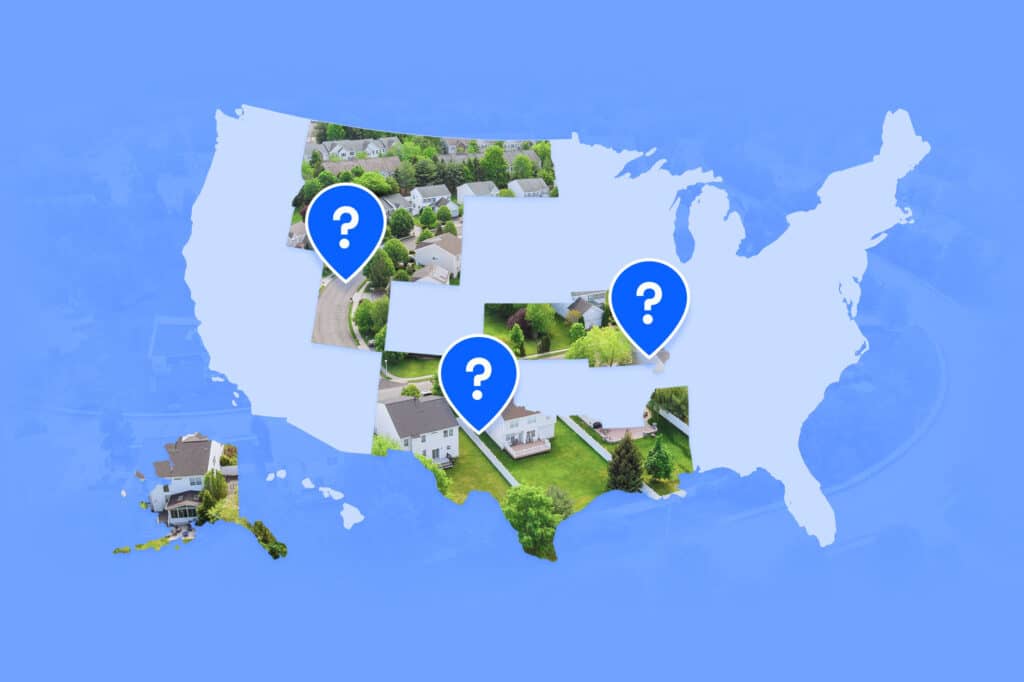
States such as New Mexico, North Dakota, and South Dakota have disclosure laws that limit public access to sales information. For the general public, that means less transparency. For real estate investors and real estate professionals, it means relying less on surface‑level data and more on experience, pattern recognition, and reliable property data.
This is where most people struggle and where The Land Method operates differently. Through our land investing solutions, we don’t rely on a single data point or public sale price information. We don’t rely on a single data point or public sale price information. Instead, we combine MLS access, local county assessor data, property assessments, asking price history, and real conversations with licensed real estate agents to understand true property values in non-disclosure markets. When others hesitate because the numbers aren’t obvious, we focus on what is available and build value estimates from multiple angles.
In non-disclosure states, clean market data doesn’t exist in one place. That’s not a disadvantage if you know how to work around it. It’s an edge. And when used correctly, limited transaction data can reveal pricing gaps, motivated sellers, and real investment opportunities that don’t show up in open‑record states.
What Are Non Disclosure States?
Understanding Non Disclosure Laws
Non-disclosure states are those states in the U.S. where the final sale price of a property is not released to the general public through government records. While the transactions of property ownership are logged, the actual price of the property is usually kept confidential. This means that people who are checking public databases or county records can verify that a transaction took place but cannot find out the real purchase price.
Some of the states operating this way are New Mexico, South Dakota, and North Dakota. In these states, the regulations are made to protect the privacy of both buyers and sellers and to restrict the public distribution of detailed sales information. Instead of making the prices of transactions available to the public widely, the data is generally shared only within certain professional circles, like licensed real estate agents having access to the Multiple Listing Service (MLS).
These limitations about disclosure were initially intended to safeguard financial privacy and to control the distribution of sensitive sales information. Nonetheless, they also affect the interpretation and application of market data by the real estate professionals.
Impact on Real Estate Transactions
Since property sale prices are not recorded in public records, real estate transactions in non-disclosure states run with even less data that are accessible to the public. Buyers, investors, and analysts are not able to simply check the definite selling price of the houses sold around the area to them for the purpose of their investment evaluation.
Having this lack of transparency is likely to pose difficulties for tax assessors, real estate agents, appraisers, and investors who generally make use of the real sales data for their property valuation estimates. Professionals, with no direct access to sale prices, tend to make use of alternate sources of information such as MLS data, listing price history, and their local knowledge of the market.
Challenges and Opportunities for Real Estate Professionals
How Non Disclosure Affects Market Data
Working in non-disclosure states forces a mindset shift. Without clear property sale prices in the public record, real estate professionals can’t rely on quick comps or surface‑level market data. Estimating home value becomes harder, especially when sales data is incomplete or delayed.
For many real estate agents, this creates friction. Pricing a listing, advising potential buyers, or explaining value to property owners takes more effort because the usual reference points aren’t visible. Access to government records alone isn’t enough, and valuation depends heavily on experience and local knowledge.
Opportunities for Real Estate Investing
At the same time, this environment creates real opportunities for real estate investors. Fewer people are confident making offers when the numbers aren’t obvious. That hesitation reduces competition and opens doors to stronger negotiations. When you understand market trends, track asking-price history, and work with reliable data sources such as MLS access and local assessors, you can identify mispriced assets and overlooked investment opportunities.
In non-disclosure states, success isn’t about having more data; it’s about knowing how to interpret the available information better than everyone else.
Finding Reliable Real Estate Data in Non-Disclosure States
Alternative Data Sources
In non-disclosure states, reliable data isn’t missing; it’s fragmented. Property sale prices don’t show up in the public record, so accuracy depends on how well you connect partial signals rather than waiting for a complete picture.
This is the exact environment where the founders of The Land Method built their process. Early on, they noticed that relying on a single source, whether tax records or online estimates, led to pricing errors in nearly 4 out of 10 deals. The fix wasn’t better tools, but better layering of information.
MLS access became the starting point, not the answer. Tracking asking price movement, days on market, and relist patterns revealed seller motivation long before price data was available.
Using Available Information for Market Analysis
In one non-disclosure market, listings that saw two or more price reductions within 30–45 days closed an average of 12% below the original list price, regardless of assessed value.
County assessor data played a different role. Instead of predicting fair market value, it helped establish guardrails. In fast‑moving markets, assessed values often lag real pricing by 12–18 months, making them useful for spotting upside but unreliable as standalone indicators.
What consistently worked was combining behavior‑based data with local insight. When MLS trends, assessment history, and agent feedback all pointed in the same direction, home value estimates tightened dramatically, even without public transaction data.
For you, this means one thing: in non-disclosure states, reliable real estate data isn’t pulled, it’s built. And once you understand how experienced operators assemble it, the lack of transparency stops being a disadvantage and starts becoming leverage.
Advice for Potential Buyers and Investors
In non-disclosure states, you usually won’t find the sale price of a property in the public record. That’s normal. People who work these markets don’t wait for perfect data; they look at patterns.
Here’s what you need to pay attention to:
- MLS access matters more than people think. Watch how long a property sits, how often the asking price changes, and whether listings quietly expire. Those signals usually tell you more than a missing number ever will.
- County assessor records still help. You’re not using them to guess home value; you’re checking ownership history, tax changes, and whether the current list price makes sense compared to past assessments.
- Local real estate agents fill the gaps. Agents closing deals in that area usually know where homes are actually trading, even when those figures never become public.
- Compare similar listings, not exact prices. When several nearby properties behave similarly, that trend is usually reliable.
For a broader context on how pricing and transactions are tracked across the United States, the National Association of Realtors publishes market research that helps explain these gaps: https://www.nar.realtor
The reality is this: in non-disclosure states, good decisions come from experience, comparison, and verification, not from chasing numbers that were never meant to be public.
Making Informed Decisions in Non-Disclosure States

In non-disclosure states, the full picture is never handed to you. Waiting for perfect clarity is usually how deals get missed. At The Land Method, decisions are made with the assumption that sale price data will be incomplete or delayed, so the focus shifts to stacking signals instead of chasing a single number.
Here’s how The Land Method approaches decision‑making:
- Compare county assessor values against recent listing and asking prices to establish realistic value ranges
- Track days on market and price reductions to understand seller urgency and pricing pressure
- Study ownership history, especially properties held 12–15 years, to spot long‑term equity shifts
- Use property assessments as indicators, not valuations. Rising assessments with tight inventory often signal upward pressure
- Flag risk when stagnant assessments align with frequent relisting, a common sign of inflated pricing
Staying informed isn’t about consuming more information; it’s about watching the right signals early.
What we monitor consistently:
- Local market analysis tools for inventory and demand changes
- Zoning updates and policy shifts that affect land use and value
- Transaction activity is discussed in industry reports and related articles, which often surface trends before buyer behavior changes
In non-disclosure states, confidence comes from pattern recognition, not transparency. When you know what matters and what doesn’t, you don’t need perfect data to make informed decisions.

FAQs
Q1. What does “non-disclosure state” actually mean?
A1. It means the sale price of a property isn’t part of the public record, so the general public can’t see what homes truly sold for.
Q2. How do people figure out home value without sale prices?
A2. By comparing listing price history, MLS access data, and county assessor records, and by reading market trends rather than relying on a single number.
Q3. Do non-disclosure laws affect property tax assessments?
A3. Yes. Tax assessors use valuation models and property data, not confirmed purchase price information, to set assessments.
Q4. Is real estate investing harder in non-disclosure states?
A4. It’s different. Real estate investors who understand market conditions often find better opportunities because fewer people know how to price correctly.
Q5. How can buyers make informed decisions without full disclosure?
A5. By using multiple data sources and working with real estate professionals who understand local market behavior, not just surface numbers.

Ginis Garcia is a seasoned real estate investor with over 14 years of experience helping both new and experienced investors achieve their goals in the housing and land markets. He started doing deals here and there in 2008. In 2011, He started working for a major real estate investor. He got his real estate license in 2012.